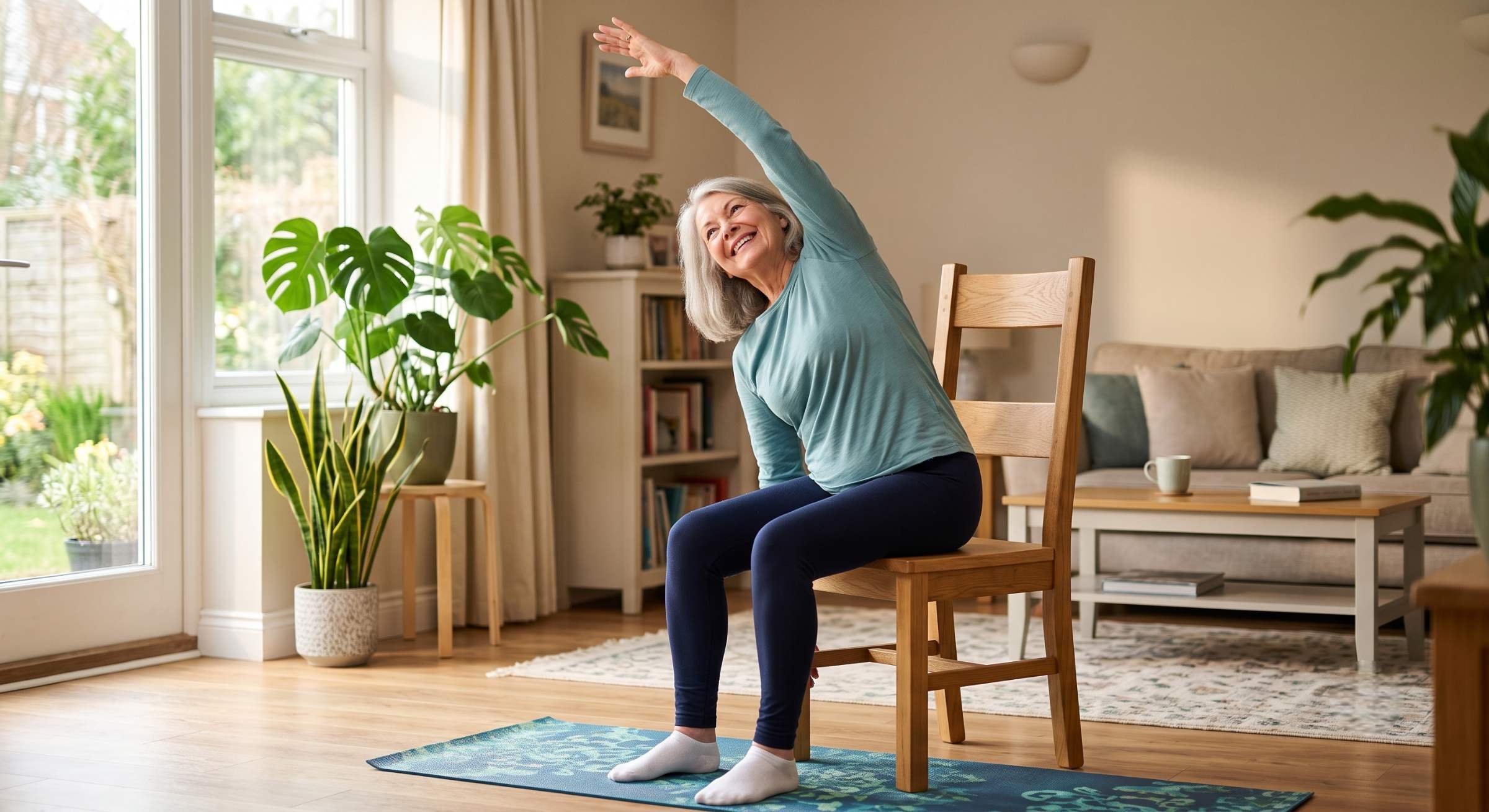
Chair Yoga: Gentle Stretches You Can Do From Your Seat
Table of Content
Chair yoga is yoga you do while sitting in a chair. Every pose, breathing exercise, and stretch is done seated, so it gives you a stable base and takes away the risk of falling. That makes chair yoga for seniors a gentle way to build strength, flexibility, and balance, even if standing for long periods is hard. You do not need any special skill or equipment to start, just a sturdy chair and a little curiosity.
Before you begin any new routine, it is smart to make sure your body is ready. If you would rather not travel to a clinic, you can pick your own doctor and have them come to your home the same day. With Doctor2me, you can choose a doctor and book a home visit, which means no waiting rooms and no risk of catching something in a crowded office.
What Is Chair Yoga?
How It Differs From Mat Yoga
Regular yoga is usually done standing or on the floor. Chair yoga keeps the same ideas but moves them into a seat. As Harvard Health explains, the term can also mean poses done while standing and holding onto a chair for support. Either way, the chair gives you something steady to lean on, so you can focus on the stretch instead of worrying about balance.
Who Chair Yoga Is For
Anyone can try chair yoga, but it is a great fit for people who find it hard to balance, stand for a long time, or get up from the floor. It also works well as a quick stretch during a long car ride, a plane trip, or a busy day at a desk. Because the moves are gentle and easy to change, chair yoga positions can be adjusted to fit almost any body and any level of fitness.
The Benefits of Chair Yoga for Seniors
Benefits for the Body
Chair yoga can deliver many of the same rewards as standing yoga while keeping you seated and safe. In one small study of older adults with osteoarthritis in the lower body, doing chair yoga exercise for 45 minutes twice a week over eight weeks led to less pain and fatigue. Another study found that people with knee osteoarthritis were better able to handle daily tasks after a 12-week program. Regular practice can support flexibility, strength, and steadier balance over time.
Benefits for the Mind and Mood
The gentle movement and slow breathing in a chair yoga workout can also calm the mind. Research collected by the National Center for Complementary and Integrative Health suggests that yoga may lower stress, ease anxiety and depression, and improve sleep and balance. In one study, older adults felt more stress relief after a six-week chair yoga program than others who did chair aerobics, walking, or social games. A few minutes of seated practice can leave you feeling calmer and more focused.
Setting Up a Safe Space at Home
Choosing the Right Chair
Your chair is your main piece of equipment, so it needs to be safe. Pick a seat that does not tip, wobble, roll, or slide. Skip chairs with wheels. A chair without arms is best, since it gives you more room to move in different directions. Place it on a flat, non-slip surface, and keep the area around it clear.
Making the Rest of Your Home Safe
A safe practice space is part of a safe home. If you or a loved one worries about slips and falls, a home safety check can point out easy fixes like grab bars, better handrails, or a clearer path through a room. Some families arrange a free home assessment through Call Before You Fall, which reviews the home layout and suggests bath safety equipment, handrails, and other simple changes that make daily movement easier and safer.
A Simple Chair Yoga Routine to Try
Here is a short routine built from five gentle chair yoga moves. You can do them in order, or pick one or two whenever you want a quick stretch. Sit up straight with your feet flat on the floor, breathe slowly, and never push into pain. Check with your doctor first if you have back, shoulder, or hip problems, or if you recently had surgery.
Seated Crescent and Back Bend
For the seated crescent, sit tall and tighten your stomach muscles. As you breathe in, raise your right arm overhead. As you breathe out, bend gently to the left and hold for a few breaths. Straighten up, lower your arm, and repeat on the other side. For the back bend, place your hands on the seat behind you, roll your shoulders back, and gently lift your chest toward the ceiling without straining your neck. These two chair yoga stretches open up the sides and front of your body.
Chair Spinal Twist
Sit sideways on a chair without arms, with your feet flat. Hold the back of the chair with both hands. As you breathe out, slowly turn your upper body toward the back of the chair and look over your shoulder. You should feel a light stretch through your torso and neck, never a strain. Breathe in to return to center, then switch sides. Twists like this are among the most popular chair yoga asanas (poses) because they help keep the spine mobile.
Pigeon for the Hips
The pigeon pose gives you yoga stretches for hips without getting on the floor. Sit tall and rest your left ankle across your right thigh. Sit up straight and keep your spine long. If you feel a stretch in your left hip, stay there. If not, gently press down on your left knee and lean forward a little on an exhale until you feel the stretch. Hold for a few breaths, then switch sides. Tight hips are common with age, and this move can ease that stiffness.
Shoulder Stretch
For the shoulder stretch, hold a strap or a small towel in your right hand. Raise that arm overhead and bend the elbow so the towel drops down your back. Reach your left hand up your back and grab the other end of the towel. Hold where you feel a gentle stretch, then switch sides. This is a friendly way to loosen tight shoulders, which many people notice after years of sitting.
Building Chair Yoga Into Your Week
How Often and How Long
You do not need long sessions to feel a difference. Even a few minutes of seated stretches a day can help.Many of the studies that showed benefits used sessions of about 45 minutes, once or twice a week, but you can start much smaller. Begin slowly, give your body time to get used to the movements, and add more as you feel ready. A steady chair yoga routine you can keep up beats a hard one you quit after a week.
Finding Classes and Guidance
Learning good form early helps you get more out of each pose and lowers your risk of getting hurt. Look for gentle or seniors chair yoga classes, either in person or online, where an instructor can guide you. If joint pain or stiffness makes movement hard, a hands-on plan from a physical therapist can help you adjust the poses to your body. A practice like Comprehensive Natural Healthcare offers physical therapy along with other natural care, which can be useful if you want a routine shaped around your own needs.
Safety Tips and When to Check With a Doctor
Move Within Your Limits
As with any exercise, injuries can happen, most often sprains and strains. Serious injuries are rare, but older adults should take care. Practice under a qualified instructor when you can, and if you are new, avoid extreme moves. Start slow, breathe, and stop if anything hurts. The goal is gentle, steady movement, not a hard workout.
Conditions That Need Extra Care
Some health conditions call for changes to a yoga practice. These include past knee or hip injuries, lower spine problems, severe high blood pressure, balance issues, and glaucoma. If any of these apply to you, talk with your doctor and your instructor before you begin. When you would rather not head out to an office, a Doctor2me doctor can come to your home the same day to check that chair yoga is a safe choice for you, with no lines and no crowded waiting room.
FAQ
Does chair yoga really work for seniors?
Yes. Studies show that regular chair yoga can ease joint pain and fatigue, improve daily function, and lower stress in older adults. Because it is done seated, it also removes the risk of falling that comes with standing poses. It is a safe, gentle way to stay active.
Is chair yoga good for stretching?
Chair yoga is an excellent way to stretch. Moves like the spinal twist, pigeon, and shoulder stretch gently loosen the spine, hips, and shoulders. Seated stretching is easier on the knees and back than floor yoga, which makes it a good fit for stiff or sore joints.
How many minutes a day should you do chair yoga?
There is no strict rule. Even a few minutes of seated stretches a day can help. Many studies used sessions of about 45 minutes once or twice a week, but it is fine to start with 5 to 10 minutes and build up slowly as you feel ready.
What are the benefits of chair yoga for seniors?
Chair yoga can support flexibility, strength, and balance while lowering stress, anxiety, and joint pain. Research also links yoga to better sleep and mood. For seniors, a big plus is that all of this happens from a safe, seated position.
Is chair yoga good for weight loss?
Chair yoga is gentle, so on its own it burns fewer calories than brisk activity. Still, yoga has been linked to weight loss as part of a healthy routine, and it can build strength and reduce stress. Pairing it with regular movement and good eating works best.
Is chair yoga only for seniors?
No. While chair yoga for seniors is very popular, anyone can do it. It is also great for people recovering from injury, those with limited mobility, or anyone who sits for long stretches at a desk and wants a quick, safe way to move.
You May Also Like