Transitioning Bedrooms and Bathrooms for Successful Aging in Place
Table of Contents
Aging in place is a strategic decision that enables individuals to maintain their independence and comfort within their own homes for the long term. According to the National Institutes of Health (NIH), the feasibility of remaining in a familiar environment is largely determined by how well the living space is adapted to accommodate changing physical needs. By prioritizing a layout that supports one floor living, homeowners can eliminate the hazards associated with stairs and ensure that essential rooms—specifically the bedroom and bathroom—remain fully accessible. This process often begins with a consultation with a Primary Care physician to assess mobility and determine necessary medical supplies.
Bedroom Modifications for One Floor Living
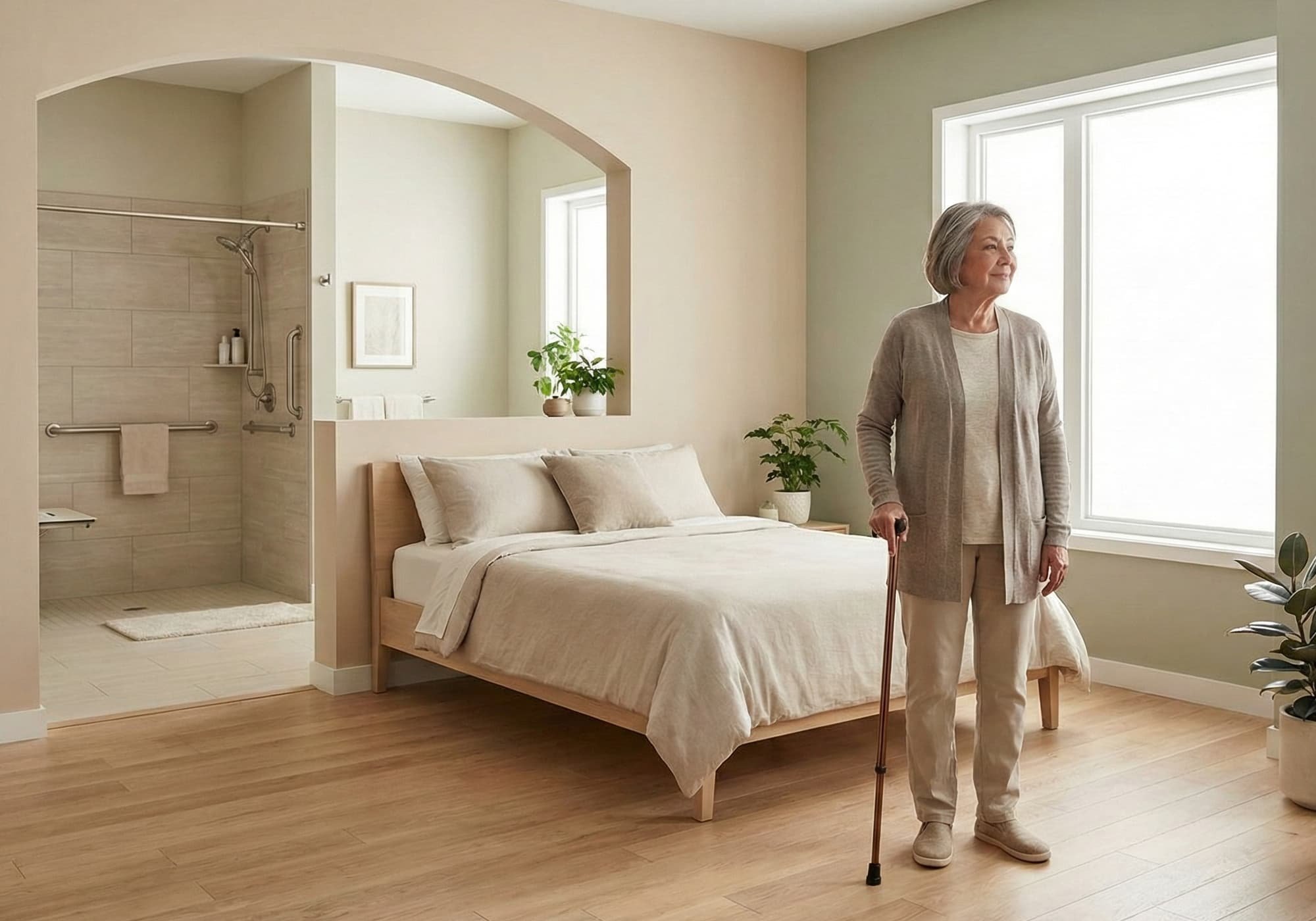
The primary objective in a bedroom is to create a safe sanctuary that allows for effortless access to the bed and storage while minimizing fall risks. Transitioning to one floor living involves rethinking the floor plan to ensure there is ample clearance for mobility aids like walkers or wheelchairs.
Layout and Stability
Clear Walkways: Maintaining an unobstructed path of at least 36 inches around the bed is crucial for safe navigation.
Furniture Placement: The NIH emphasizes that removing clutter and unnecessary furniture is a vital first step in reducing the likelihood of a fall.
Professional Consultation: To determine the ideal bed height and arrangement based on unique movement mechanics, individuals may consult an aging in place specialist or a physical therapist.
Balance Support: Experts like DizzyCare Physical Therapy can evaluate an individual's sense of balance and provide specific training to move safely within the bedroom environment.
Bed Height: An optimal bed height allows a person to sit on the edge with both feet flat on the floor and knees bent at a 90-degree angle, facilitating a safer transition to a standing position.
Visibility and Electrical Upgrades
Accessible Lighting: Light switches should be reachable from the bed to prevent walking in the dark.
Switch Design: The Mayo Clinic suggests replacing traditional toggles with rocker-style or touch-sensitive switches that are easier to operate.
Path Illumination: Installing motion-sensing night lights along the route from the bed to the bathroom significantly reduces nighttime tripping hazards.
Aging in Place Bathroom Renovations for Safety
The bathroom is statistically the highest-risk area in the home. Data from the Centers for Disease Control and Prevention (CDC) indicates that more than one-third of home fall injuries occur here, frequently during transitions near the tub or toilet. Targeted aging in place bathroom renovations are essential for mitigating these specific hazards.
Shower Accessibility and Support
Zero-Entry Showers: A walk-in shower without a threshold is the gold standard for accessibility, as it eliminates the need to step over a high curb.
Grab Bar Installation: Reinforced, wall-mounted grab bars should be placed both inside the shower and near the toilet.
Safety Experts: For high-quality installation that meets medical standards, organizations such as Call Before You Fall specialize in fall prevention systems.
Seated Bathing: The Mayo Clinic recommends utilizing a stable shower seat paired with a handheld showerhead to reduce fatigue and improve control during hygiene routines.
Sanitary Fixtures and Flooring
Comfort-Height Toilets: Installing a toilet that is 17 to 19 inches high makes sitting and standing much easier on the joints compared to standard models.
Lever Faucets: Replacing circular knobs with lever-style handles allows for operation with a closed fist, which is vital for individuals with limited hand strength.
High-Traction Surfaces: The CDC advises using non-slip coatings or adhesive strips on tile floors and ensuring all bath mats are secured with double-sided tape.
Home Modification for Elderly Residents and Support Systems
A holistic approach to safety combines structural changes with professional human support. When planning a home modification for elderly family members, the needs of both the resident and their caregivers must be considered.
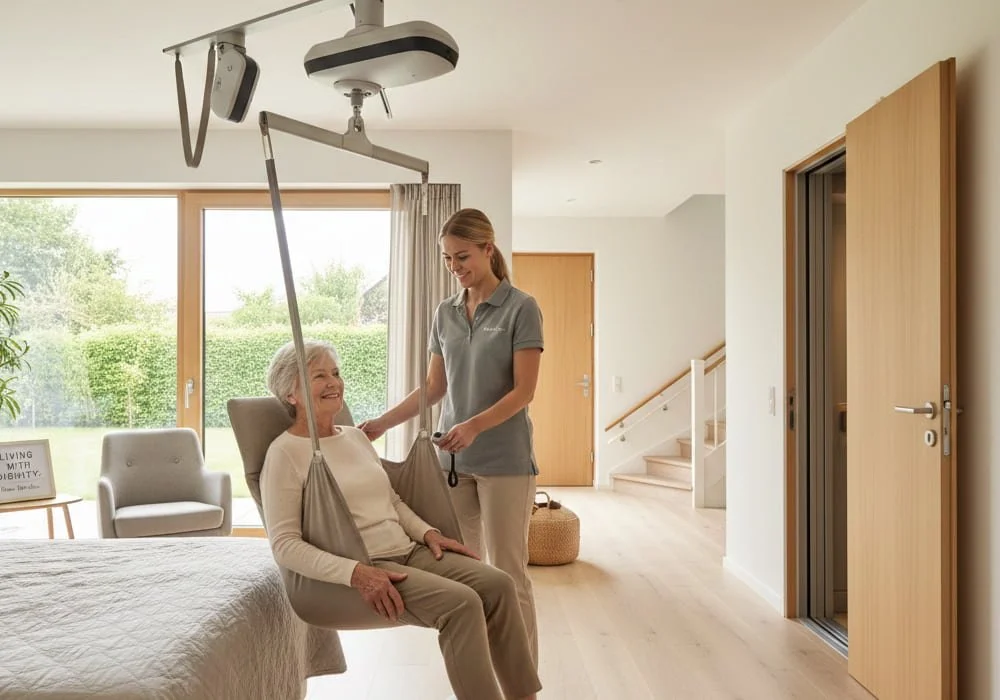
Caregiver Clearance: Widening doorways to 32–36 inches improves individual mobility and allows aging in place home care professionals to assist safely.
Burbank Area Support: Local specialists, such as A Better Solution In Home Care in Burbank, California, emphasize that proper turning radii in rooms allow caregivers to support clients without risking physical strain.
Cognitive Safety: If a transition to a single level is necessitated by memory changes, specialized dementia care management should guide the design.
Environmental Simplification: Consulting resources like Dementia Partner helps create a high-contrast, low-stress environment that reduces disorientation.
Hardware Standardization: Replacing standard door knobs with lever handles throughout the home ensures that all rooms remain accessible even if grip strength declines.
Research-Driven Outcomes for Safety
Research published by the Kaiser Permanente Division of Research demonstrates that professional home hazard assessments, combined with timely modifications, drastically reduce the frequency of injuries and subsequent hospitalizations. Strategic house plans for one floor living represent a proactive investment in long-term wellness.
Priority Modification Summary
| Zone | Low-Cost / High-Impact Fixes | Comprehensive Structural Changes |
| Bedroom | Motion night lights, removing rugs | Power-adjustable bed, widened doorways |
| Bathroom | Non-slip strips, toilet seat riser | Walk-in shower, grab bars by Call Before You Fall |
| General | Replacing knobs with lever handles | Care support from A Better Solution In Home Care |
Adapting a home for the future is an investment in peace of mind. By focusing on a bedroom and bathroom that support accessibility, individuals can maintain a high quality of life within their cherished communities.
FAQ
1. What does "aging in place" actually mean for a homeowner?
Aging in place refers to the ability for an individual to live in their own home and community safely, independently, and comfortably, regardless of age, income, or ability level. It often involves making strategic home modifications that allow a person to navigate their living space without the need for constant external assistance.
2. Why is transitioning to one-floor living considered a safer option?
Transitioning to one-floor living is recommended because it eliminates the primary hazard of stairs, which are a leading cause of falls among seniors. By consolidating essential areas like the master bedroom and bathroom onto the ground floor, residents can maintain their autonomy and reduce physical strain.
3. What are the most critical bathroom modifications for safety?
According to the CDC, the bathroom requires the most attention due to moisture and slippery surfaces. Key renovations include:
Zero-entry (curbless) showers that eliminate tripping hazards.
Professionally installed grab bars near the toilet and inside the shower. Organizations like Call Before You Fall provide medical-grade installation for these features.
Comfort-height toilets and lever-style faucets that are easier to use for those with limited mobility or grip strength.
4. How can a bedroom be adapted for better accessibility?
Effective bedroom adaptations focus on visibility and movement:
Widening doorways to 32–36 inches to accommodate mobility aids and aging in place home care providers.
Optimizing bed height so the resident's feet touch the floor while sitting, which aids in safe standing.
Improving lighting with motion-sensor night lights and accessible switches, as recommended by the Mayo Clinic.
5. When should a professional physical therapist be involved?
A consultation with a specialist, such as those at DizzyCare Physical Therapy, is highly beneficial before starting renovations. These professionals assess an individual’s balance and movement mechanics to ensure that the placement of grab bars and furniture is customized to their specific physical needs.
6. How do home modifications differ for those requiring dementia care management?
For individuals with cognitive changes, modifications should focus on reducing confusion and stress. Resources like Dementia Partner suggest creating a high-contrast environment, simplifying layouts, and removing complex patterns or mirrors that might cause disorientation.
7. Can a caregiver help determine what changes are needed?
Yes, Home Care providers often have extensive experience identifying daily obstacles within a home. For residents in the Burbank area, A Better Solution In Home Care can provide insights into how a space can be modified to better support both the resident and the person providing assistance.
You May Also Like