Water Aerobics and Aging Joints: What the Water Changes
Table of Content
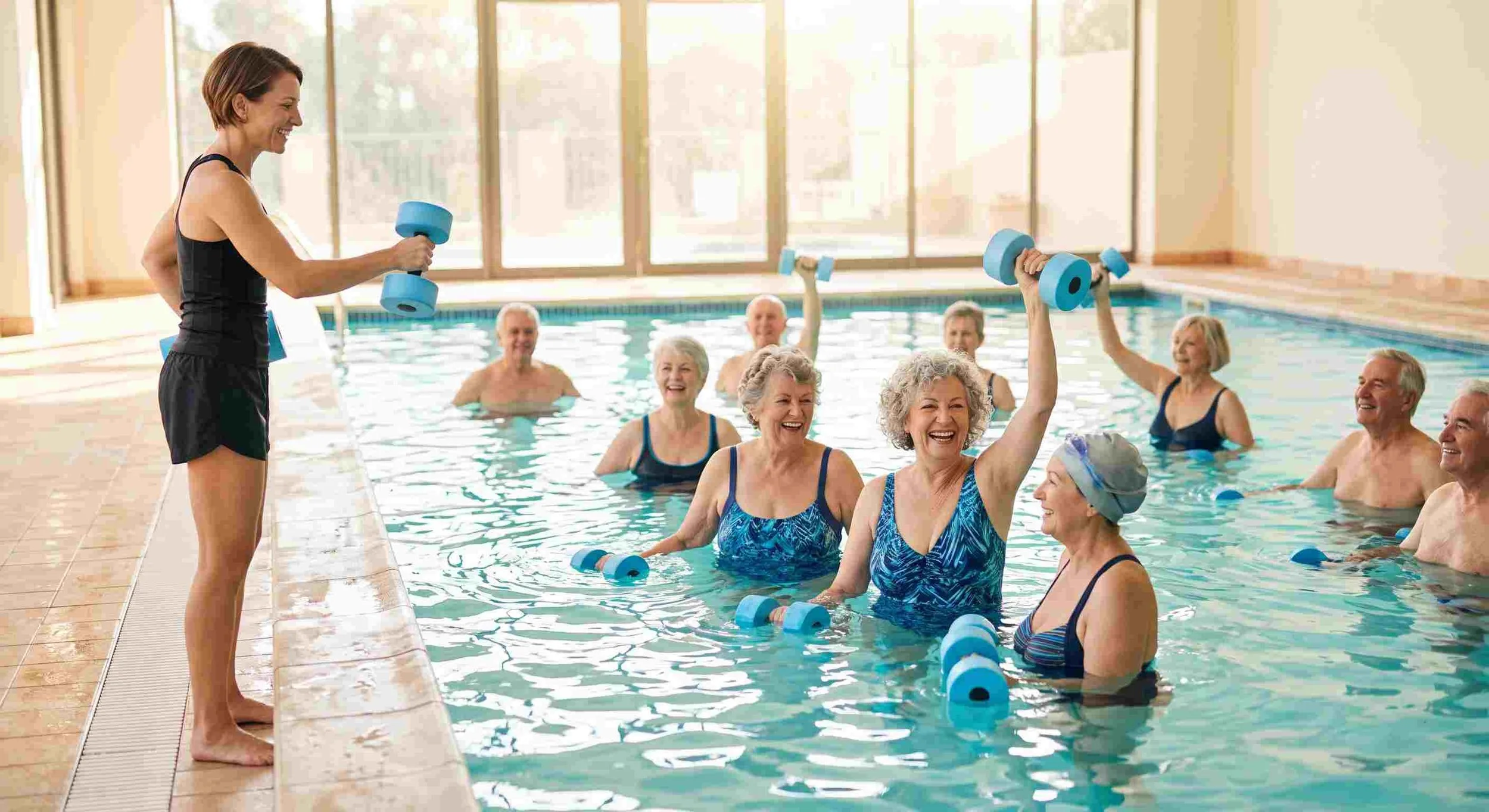
Water aerobics changes how your joints feel by holding you up, so movement that hurts on land often feels easy and almost painless once you step into the pool.
The water carries much of your weight, which lifts pressure off sore knees, hips, and backs. That is why so many older adults with arthritis turn to it to move again. It eases pain and helps you stay active, without the pounding of exercise on hard ground.
Why Water Takes the Weight Off Sore Joints
Water lifts you, and that is the whole secret. When you stand in a pool, buoyancy pushes up against gravity, so your joints carry far less load than they do on dry land. The result is movement that feels lighter and kinder to painful spots.
How Much Weight the Water Holds
The deeper you go, the less you weigh. In a 2025 review of aquatic exercise for older adults with osteoarthritis, standing in water up to about the waist unloaded roughly half of a person's body weight. At chest depth, even more of the load lifts away.
That matters a lot for a painful knee or hip. Less load means less grinding and less ache with every step you take. Many people find they can walk, bend, and stretch in the water in ways that feel impossible on land.
Why Warm Water Eases Stiffness
Warm water does more than float you. The heat relaxes tight muscles and loosens stiff joints, so movement comes easier from the first minute. Rising blood flow and that soft warmth can also quiet down pain while you exercise.
This is one reason a pool can feel so kind on a rough day. You get in, you warm up, and the stiffness melts a little. For many older adults, that first easy lap across the shallow end is the moment they decide to keep coming back.
Water Aerobics for Seniors With Arthritis, RA, and Fibromyalgia
Water aerobics suits arthritis, rheumatoid arthritis, and fibromyalgia because it works the body without punishing the joints. These conditions are common in later life, and they land on older women most of all, which is why water aerobics for seniors draws such a large share of women.
According to the CDC (2024), about 18.9% of US adults had diagnosed arthritis, and women were more likely to have it than men, 21.5% versus 16.1%. The share climbs steeply with age, reaching 53.9% of adults 75 and older.
Osteoarthritis and Rheumatoid Arthritis
For wear-and-tear osteoarthritis, the water lets you keep joints moving without adding strain. For rheumatoid arthritis, gentle water exercise can help on stiff, achy mornings when a land workout feels like far too much.
It helps to know which type of arthritis you are dealing with, since they behave in different ways. This clear guide on how rheumatoid arthritis compares with other arthritis types in seniors is a good place to sort it out.
Gout is another form of arthritis that flares up in older adults, often in the big toe. Our guide to gout triggers and flare relief walks through what sets it off and how to calm it down.
Because joint pain in later life can come from several sources at once, it helps to have someone look at the whole picture. Geriatric physician Rebecca Cook, M.D. cares for older adults with chronic conditions like arthritis, at home or by video visit.
Fibromyalgia and Widespread Pain
Fibromyalgia brings deep, widespread pain and broken sleep, and warm water seems to soften both. A 2024 review and meta-analysis found that aquatic therapy improved self-reported sleep quality in people with fibromyalgia.
The blend of warmth, support, and gentle movement is easy on tender spots. People often describe less pain and a calmer body after a session, even when the same effort on land would leave them sore for days.
Warm Therapy Pools vs Regular Pools
Why Warmer Water Usually Wins
A warm therapy pool usually beats a regular lap pool for sore joints. Therapeutic pools are kept warmer, often somewhere around 90 to 94 degrees, which soothes stiff joints far more than a cool pool ever could.
Regular pools still work, and any water is better than none at all. But if you have the choice, the warmer water tends to feel gentler and lets you move for longer before you tire out.
Aqua Therapy and Aquatic Physical Therapy
This warmer, guided kind of session is often called aqua therapy or aquatic physical therapy. A trained therapist can shape the moves around your own joints, so you rebuild safely instead of guessing on your own.
If you want that kind of hands-on guidance, FUNCTherapy provides physical and occupational therapy built around each person's goals, including help getting comfortable and steady before and during water work.
Aqua-Jogging, Water Treadmills, and Other Low Impact Options
Aqua-Jogging and Water Treadmill Workouts
Aqua-jogging and water treadmills give you real cardio with almost no pounding on the joints. They are a favorite low impact exercise for arthritis, because your feet barely take a hit while your heart still gets a workout.
In deep-water running, a float belt keeps you upright while your legs jog against the water. On a water treadmill, you walk or jog in a shallow tank, and the water still carries much of your weight the whole time.
Matching the Workout to Your Goal
Different water workouts suit different goals, so it helps to match the activity to what you want out of it. The table below lines up common options, from an aqua aerobics class to lap swimming, with what each one does best.
|
Water Activity |
Best For |
|---|---|
|
Aqua aerobics class |
A full-body, low impact workout in a friendly group |
|
Aqua-jogging (deep water) |
Cardio with almost no pounding on the joints |
|
Water treadmill |
Walking or jogging practice with steady support |
|
Aquatic physical therapy |
Guided moves to rebuild after pain or surgery |
|
Lap swimming |
Heart and lung fitness when the shoulders allow |
None of these is one-size-fits-all, and mixing them keeps things interesting. Many people join a class, add a little aqua-jogging, then fall back on gentle range-of-motion moves on their stiffer days.
Gentle Water Moves That Are Easy on Sore Joints
A handful of simple moves make up most water aerobics classes, and all of them are kind to the joints. You can do them in shallow water while holding the wall for balance.
Water walking – stroll across the shallow end, forward and then backward, to warm up.
Leg lifts – hold the wall and raise each leg out to the side and to the front.
Arm circles – sweep your arms through the water for gentle upper-body work.
Knee lifts – march in place, drawing each knee up toward your chest.
Heel raises – rise onto your toes and lower back down to steady the ankles and calves.
Start with a few of each and rest whenever you need to. As these become easy, foam dumbbells or ankle floats add a little more resistance without any jarring.
What Water Aerobics Can and Cannot Do
Water aerobics is excellent at easing pain and restoring movement, yet it builds only modest muscle. It is fair to know both sides before you count on it as your only exercise.
Where It Really Helps
Many people say the water got them back on their feet after pain had shut them down. It restores range of motion, steadies balance, and lifts mood, and it is a gentle way to return to activity after a long, stiff stretch.
The Mayo Clinic (2026) counts water aerobics among low-impact options and suggests working toward about 150 minutes of moderate activity a week. A 2024 trial even linked water-based exercise to better fitness in older adults with mild memory changes.
Where It Falls Short
Water resistance is gentle, so it will not build big muscle the way weights on land can. If bone and muscle strength are your main goal, you may still need to add some land-based resistance work over time.
Results are personal, too. Some people still get flare-ups now and then, and that is normal and not a sign you did anything wrong. If pain lingers or something feels off, you can arrange for a licensed clinician to visit you at home and take a closer look.
How to Start Water Aerobics and Find Classes Near You
Start with a beginner or arthritis-friendly class, then search water aerobics classes near me to see what is close by. Many gyms, YMCAs, and rec centers run senior water aerobics near me sessions at low cost, and some pools reserve warmer hours for older adults.
Your First Few Sessions
You do not need to be a swimmer to begin. Most classes stay in shallow water where you can stand, and instructors are used to welcoming beginners. Bring water shoes, move slowly, and stop if any move brings sharp pain.
If getting to a pool feels hard at first, some of the work can start at home. This look at home physical therapy for seniors shows how a plan can rebuild strength and balance before you ever head to the water.
Keeping It Enjoyable
Classes are social, and that part matters more than people expect. Moving with a friendly group can lift your spirits and ease loneliness, which ties closely into emotional and mental health in later life.
Staying active tends to keep the mind sharp as well. Pairing pool days with simple brain games that keep your memory sharp gives both body and mind a steady, gentle workout, and it is an easy habit to enjoy as water exercise for seniors becomes part of your week.
FAQ
-
Most older adults do well with two to three sessions a week, with a rest day in between. You can build up slowly as you feel stronger. Consistency matters more than pushing hard in any single class.
-
No. Most classes stay in shallow water where you can stand with your head well above the surface. If deeper water is used, a float belt keeps you upright, so non-swimmers can still take part safely.
-
A comfortable swimsuit and water shoes with grippy soles are all you really need. Water shoes help you feel steady on the pool floor. Some people also bring foam dumbbells or a float belt, though classes usually provide them.
-
Both are gentle, but water aerobics lets you control each movement and stay in shallow water, which many people find easier than swimming laps. Swimming can bother stiff shoulders or necks. The best choice is the one you enjoy and will keep doing.
-
It can help as part of a routine, since moving against water burns energy and builds stamina. On its own it is not a fast weight-loss plan. Paired with everyday activity and steady eating habits, it supports a healthy weight over time.
-
Often yes, once the incision has fully healed and your care team gives the go-ahead. The water's support makes it a gentle way to rebuild movement after surgery. Always check the timing with the provider who managed your recovery.

Written by Sofiia Puhach
September 23, 2026
You May Also Like