When Period Cramps Stop Being Normal
Table of Content
Some period cramps are normal, but pain that stops your life, bleeding that soaks through protection fast, or pain that keeps getting worse is not something to just push through. These can be signs of a treatable condition like endometriosis or fibroids. This guide helps you tell everyday cramps from the kind worth getting checked.
Most people feel some cramping with their period. The tricky part is knowing where normal ends and a warning sign begins.
You know your body better than anyone. If something feels off, that feeling is worth listening to.
Are Period Cramps Normal, or a Sign of Something Else?
Mild to moderate cramps around your period are normal, and most people get them. According to the Office on Women's Health, more than half of people who have periods feel some pain with them.
Cramps happen because your uterus tightens to shed its lining. The Cleveland Clinic explains that a natural chemical called prostaglandin drives those contractions, which is the ache you feel low in your belly.
For many people the pain is a background annoyance for a day or two. It eases with rest, heat, or an over-the-counter pain reliever, and then it is gone.
The concern is not the cramp itself. It is pain that is severe, lasts a long time, or comes with other changes. That pattern is the signal to pay attention.
What Is the Difference Between Normal Cramps and Dysmenorrhea?
Dysmenorrhea is the medical word for painful periods, and it comes in two types. Primary dysmenorrhea is ordinary cramping with no underlying disease. Secondary dysmenorrhea is pain caused by another condition, and it often behaves differently.
Primary cramps usually start a day or two before your period and fade within two or three days. The pain is predictable, and it tends to ease as you get older.
Secondary pain often breaks that pattern. Cleveland Clinic notes that it can start earlier in your cycle and last longer than typical cramps, sometimes until the bleeding fully stops. If your pain is changing or growing over time, that is a reason to get checked, much like other pelvic pain that overlaps with cramps and bloating.
When Do Period Cramps Cross the Line Into a Warning Sign?
Cramps cross the line when they stop your normal life, keep getting worse, or come with heavy bleeding or pain outside your period. Those are the changes that deserve a doctor's eye, not a quiet wait-and-see.
Keeping a simple record helps you and your provider see the pattern. Note when the pain starts, how bad it is, how many pads or tampons you use, and anything else you feel.
Signs that are worth getting checked include:
Pain so strong it keeps you home from work, school, or daily tasks
Cramps that last longer than two or three days each cycle
Pain that keeps getting worse month after month
New, severe cramps that started after your mid-twenties
Pain at times other than just before or during your period
Bleeding that is very heavy or lasts longer than seven days
The Office on Women's Health suggests seeing a provider if over-the-counter pain medicine does not help or the pain gets in the way of your life. Trust that guidance even if the pain has become your normal. If getting to a clinic is hard, a clinician who can see you at home can start the evaluation.
Could My Painful Periods Be Endometriosis?
Very painful periods can be a sign of endometriosis, a condition where tissue like the uterine lining grows outside the uterus. The World Health Organization estimates it affects about 1 in 10 women of reproductive age, roughly 190 million people worldwide.
Endometriosis can cause severe menstrual pain, heavy bleeding, and pelvic pain that lingers after your period ends. It can also bring pain with sex, bowel movements, or urination. None of that is something you have to accept as just bad luck.
One hard truth is how long a diagnosis can take. The WHO reports that it takes an average of 4 to 12 years to be diagnosed, partly because period pain is so often brushed off as normal. That delay is not in your head, and it is a real reason to keep asking questions.
Pelvic pain can also weigh on your mood, your relationships, and your intimacy. Support like Sex and Sensibility, which offers intimacy coaching and somatic sex education, can help people work through pain that shows up during sex. Caring for the emotional side of a long health struggle matters as much as the physical side.
How Heavy Is Too Heavy for a Period?
A period is considered heavy if you soak through a pad or tampon in under two hours, pass large clots, or bleed longer than seven days. The Centers for Disease Control and Prevention notes this kind of bleeding, called menorrhagia, affects about 1 in 5 women and can lead to anemia.
Heavy bleeding can leave you tired, weak, or short of breath because it drains iron from your body. It is common, but common does not mean you should live with it. It can often be treated once the cause is clear.
Here is a simple way to compare a typical period with one worth getting checked:
Sign |
Usually Normal |
Worth Getting Checked |
|---|---|---|
Length of period |
About 4 to 5 days |
Bleeding longer than 7 days |
Changing protection |
Every few hours |
A pad or tampon soaked in under 2 hours |
Clots |
Smaller than a quarter |
Clots the size of a quarter or larger |
Daily life |
Mostly uninterrupted |
Bleeding that keeps you home |
Energy |
Steady |
Feeling tired, weak, dizzy, or short of breath |
What Helps With Period Cramps at Home?
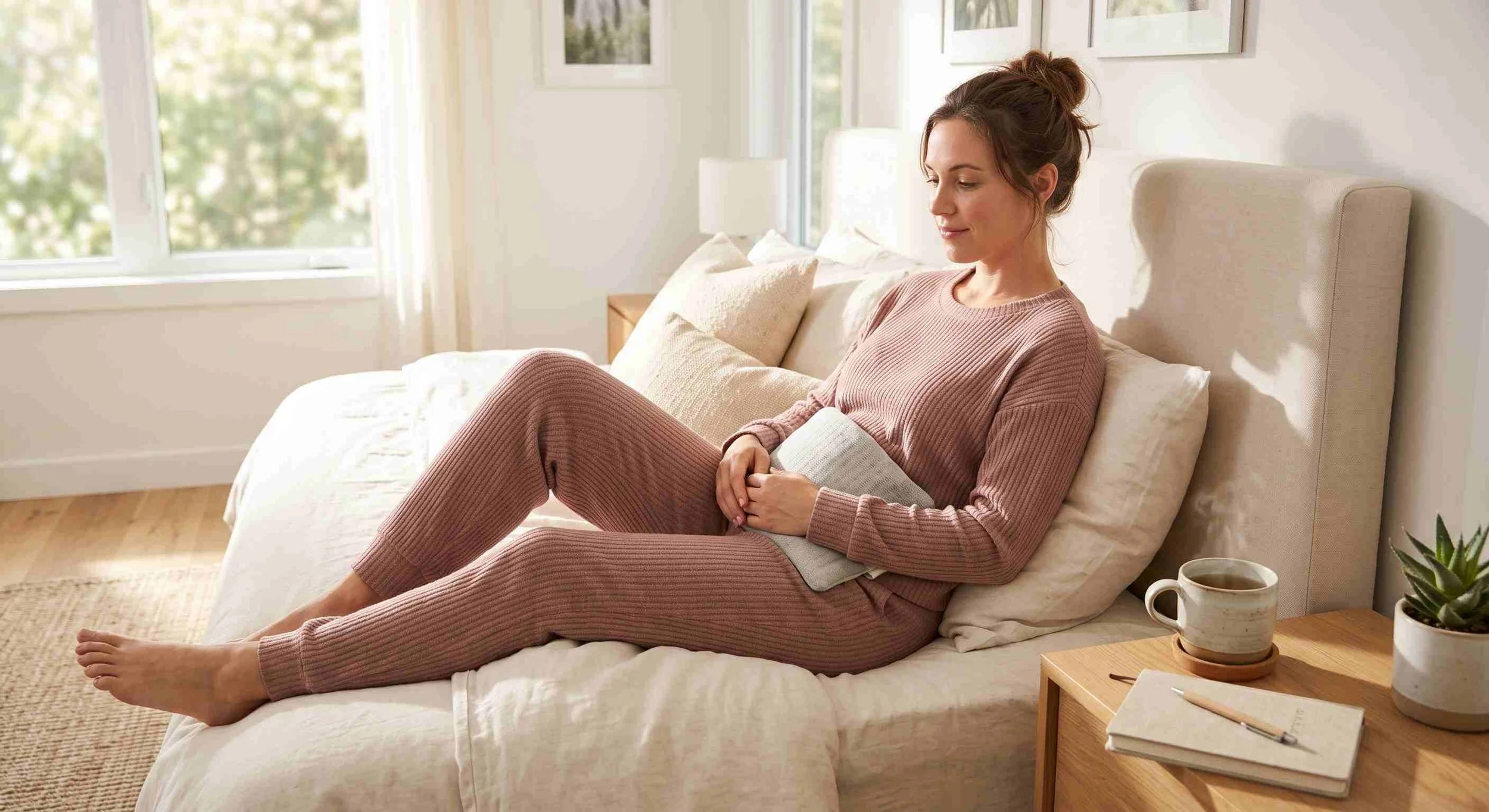
Simple home steps ease most everyday cramps. A heating pad on your lower belly or back relaxes the muscle and dulls the ache. Gentle movement, rest, and warm fluids help too.
Cleveland Clinic points to a few habits that tend to make periods more comfortable. Regular exercise, steady sleep, and easing back on caffeine can all take the edge off for some people.
Over-the-counter pain relievers can help when taken as the label directs, ideally as soon as cramping begins. If home care and these basics are not enough, that is useful information to bring to a provider, not a sign you are doing something wrong.
Relief for secondary dysmenorrhea works differently. When another condition is behind the pain, treating that condition is what brings lasting comfort, so getting the right diagnosis is the real first step.
How Do I Get My Period Pain Taken Seriously?
Come with a record, be specific, and ask direct questions. Feeling dismissed is a common and painful experience, and a clear picture of your symptoms makes it much harder to wave off.
Before your visit, track a few cycles. Write down your pain level day by day, how much you bleed, any clots, and how the pain affects your life. Facts on paper move a conversation forward.
A good place to start is a primary or preventative care provider who will listen and begin the workup. Providers such as RW Family Practice & Preventative Care, which offers preventative care, can take a full history and order the first tests.
If your provider finds nothing on a routine visit but your bleeding is heavy, the CDC suggests asking to be tested for a bleeding disorder. It is fair to keep asking until you have answers, and to seek a second opinion if you still feel unheard. You can also look for a clinician who visits patients at home if travel is a barrier.
Your pain is real, and wanting an explanation is reasonable. The goal is simple: find the cause, then find relief.
FAQ
-
Yes. Passing small clots, about the size of a quarter or smaller, is common and usually nothing to worry about. Clots larger than a quarter, especially with very heavy flow, are worth mentioning to a provider.
-
They can. Fibroids are noncancerous growths in or on the wall of the uterus, and they can cause cramping along with heavy or longer periods. A provider can check for them with a simple exam and imaging if needed.
-
For many people, primary cramps ease over time and often improve after childbirth. Pain that instead gets worse with age is less typical and is a reason to get checked, since it can point to a secondary cause.
-
It might, for some people. Staying hydrated, eating regular balanced meals, and cutting back on caffeine and alcohol can make cramps feel milder. These changes are gentle helpers, not a substitute for care when pain is severe.
-
Higher stress is linked to more painful periods for some people. Rest, gentle movement, and steady sleep can help your body manage both stress and cramps. If pain stays strong despite this, talk with a provider.
-
Seek prompt care for sudden, severe pelvic pain, pain with fever, or bleeding so heavy you feel faint, dizzy, or short of breath. These signs deserve same-day attention rather than waiting for your next appointment.
You May Also Like