Early Signs of Dementia: A Complete Guide for Families
Watching a loved one become more forgetful or act "out of character" is hard. For many families, it starts with small shifts that are easy to miss. A missed appointment. A pair of keys in the wrong place. A pause to find the right word during Sunday dinner. It is tempting to brush these moments off as "normal aging." But learning the early signs of dementia is the first step toward better care and smart planning.
Dementia is not one disease. It is a broad term for several thinking problems that get in the way of daily life. According to the World Health Organization, 57 million people worldwide were living with dementia in 2021, with nearly 10 million new cases each year. Catching dementia early means families can get support sooner. It also means more time to explore treatments and make smart choices about the future.
What Is Dementia, and How Is It Different from Normal Aging?
Dementia means a drop in thinking ability that is big enough to affect a person's independence. The risk goes up with age, but it is not a normal part of getting older. Telling the difference between age-related forgetfulness and early dementia takes careful watching. For example, forgetting where you put your glasses is common. But forgetting what glasses are used for is a serious red flag.
Early action matters. According to the National Institute on Aging, a diagnosis in the early stage gives families the best chance to manage symptoms and plan ahead. Specialized help from a Dementia Partner can be a big help here. They guide families through these changes with care and clinical know-how, so no one has to face the diagnosis alone.
Normal Aging vs. Early Dementia: At a Glance
| Feature | Normal Aging | Early Dementia |
| Memory | Forgetting names or appointments but remembering them later | Forgetting newly learned info and not recalling it later |
| Problem Solving | Sometimes making errors when balancing a checkbook | Not being able to follow a plan or work with numbers |
| Sense of Time | Forgetting the day but figuring it out later | Losing track of dates, seasons, and time passing |
| Language | Sometimes struggling to find the right word | Trouble joining or following a conversation |
| Judgment | Making a bad choice once in a while | Steady poor judgment (like falling for scams) |
What Are the Most Common Early Symptoms of Dementia?
Symptoms vary based on the type of dementia, such as Alzheimer's, vascular dementia (caused by problems with blood flow to the brain), or Lewy body dementia. But certain patterns show up across all types. Spotting these signs early can really change the course of care.
Short-Term Memory Loss: The Warning Signs
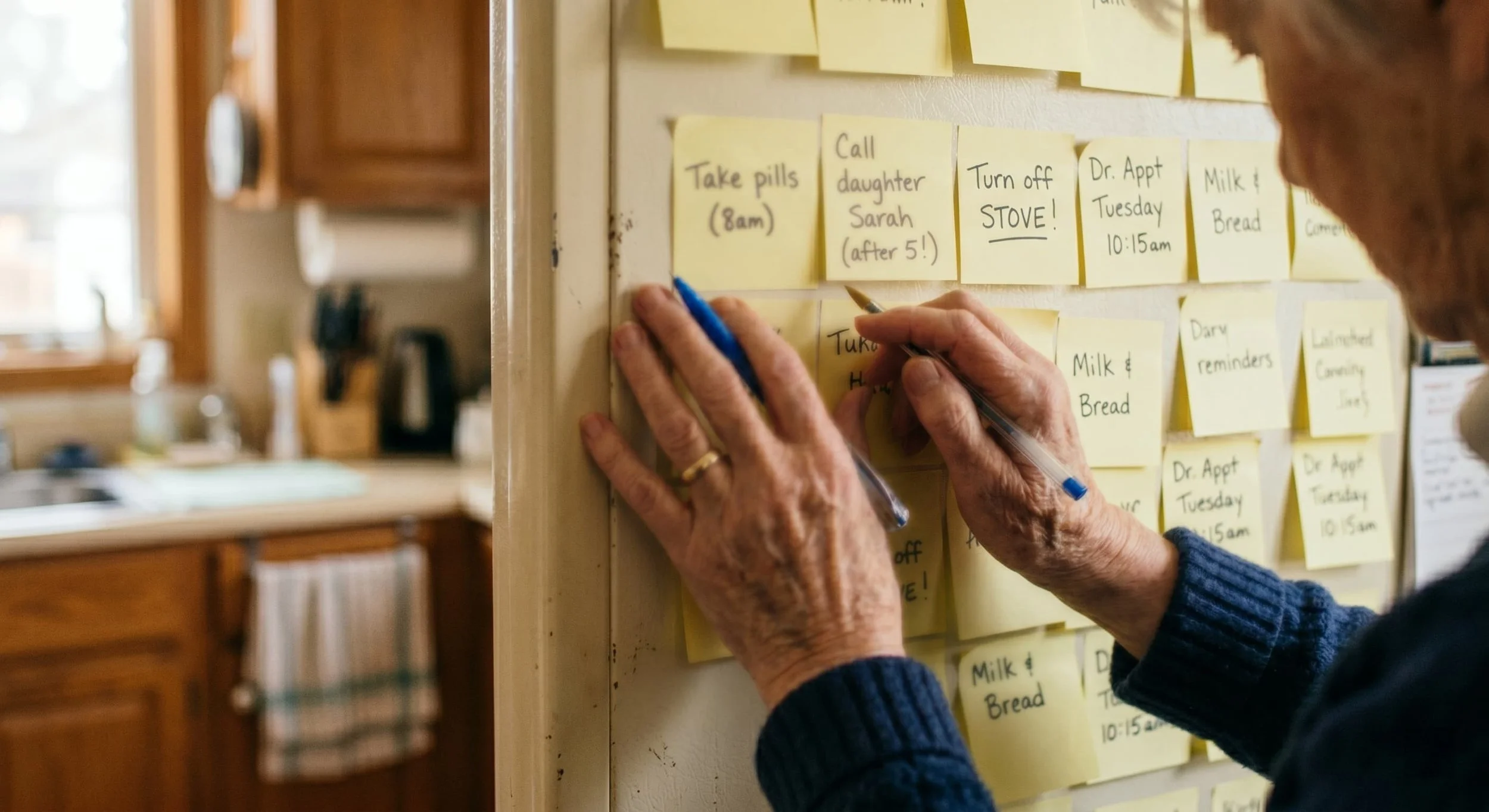
The most common early symptom of dementia is short-term memory loss. At first, this often means forgetting things just learned. A person might ask the same question over and over. Or they may lean heavily on sticky notes and reminders for tasks they used to handle with ease.
Long-term memories often stay clear. A loved one may still remember childhood events or their wedding date. But the brain has trouble "recording" new information. That's why someone might recall the name of their first-grade teacher but forget what they had for breakfast an hour ago.
Trouble with Familiar Daily Tasks
Tasks that used to be easy can suddenly feel hard. This might include trouble following a familiar recipe, finding the way to a local grocery store, or managing a household budget. Families in the Los Angeles area may notice a loved one getting confused by the layout of their own neighborhood. When these challenges show up, help from A Better Solution In Home Care can keep the home safe and working while preserving the person's dignity and independence.
Confusion About Time and Place
A person in early-stage dementia can lose track of dates, seasons, and the passage of time. They may forget where they are or how they got there. This kind of confusion is a key symptom and needs attention. It can lead to safety issues if the person wanders or gets lost in unfamiliar places.
What Subtle Thinking and Behavior Changes Should I Watch For?
Beyond memory, dementia affects how the brain handles language, social cues, and logic. These small shifts often cause more tension within families than memory loss itself. That's because they get blamed on stubbornness or depression.
Trouble with Words and Communication
Finding the "right" word becomes a frequent struggle. A loved one might stop mid-sentence, repeat themselves, or use the wrong name for something (like calling a "watch" a "hand-clock"). According to the American Speech-Language-Hearing Association, these communication gaps often lead to pulling back from social events. Fast conversations become exhausting to keep up with.
Changes in Judgment and Decisions
Dementia can hurt the brain's decision-making ability. A loved one may make poor money choices or pay less attention to their grooming and hygiene. They may also be more likely to fall for scams. Or they may make out-of-character choices about their safety, like crossing a busy street without looking.
Mood Swings and Personality Shifts
It is common for a person's personality to shift. Someone who was outgoing may become shy. A patient person may become quick to get upset. These changes are often linked to changes in the front part of the brain (the frontal lobes) that controls emotions and social behavior. Families often notice more worry, sadness, or even paranoia during this phase.
What Does the Latest Research Say About Dementia Risk?
Modern research shows that the brain changes tied to dementia begin years – sometimes decades – before the first visible symptoms. Scientists are working to find specific signs in the body, called biomarkers, that can predict thinking decline. For families, this is why "wait and see" is rarely the best plan.
According to the 2024 Lancet Commission on dementia prevention, intervention and care, about 45 out of every 100 dementia cases worldwide could be prevented or delayed by addressing 14 risk factors people can change. These factors are: hearing loss, social isolation, high blood pressure, smoking, extra body weight, depression, lack of physical activity, diabetes, heavy alcohol use, head injury, air pollution, low education, untreated vision loss, and high LDL ("bad") cholesterol.
Working with medical professionals also helps figure out whether symptoms are caused by something that can be fixed – like a vitamin B12 shortage or thyroid problem – or a long-term brain condition.
What Are Helpful Caregiving Tips for Early-Stage Dementia?
Caregiving is a marathon, not a sprint. Good caregiving focuses on patience, structure, and keeping the person's sense of self.
Build a routine: Doing the same things at the same time each day lowers anxiety. Keep meals, medications, and activities on a steady schedule.
Keep communication simple: Use short sentences. Ask one question at a time. Give your loved one plenty of time (about 20 seconds) to think and respond.
Encourage independence: Let them do as much as they can on their own, even if it takes longer. This helps protect their self-esteem and motor skills.
Focus on safety: Remove tripping hazards. Improve lighting. Think about wearable ID for safety.
Be flexible: What works today might not work tomorrow. Adapt to their world instead of forcing them into yours. This is key to less conflict.
For families who feel that the current living setup may need to change, Assisted Living Solutions offers guidance. They help find environments built around safety and thinking health. Planning ahead – instead of waiting for a crisis – lets your loved one have a say in their future care.
How Can Professional Support Help Caregivers?
You do not have to face these challenges alone. Knowing that a loved one needs help is an act of love, not a sign of failure. Whether it is professional home care or specialized memory support, there are resources made to ease the load on family members.
Connecting with groups that specialize in memory care helps make sure the support is based on real evidence and given with compassion. Experts can help families tell the difference between types of dementia. They can also share what to expect in the months and years ahead. This whole-person approach also helps reduce caregiver burnout – a real risk on the dementia journey.
How Does Doctor2me Make Early-Stage Care Easier?
When the first signs of dementia show up, the idea of visiting crowded clinics, loud waiting rooms, and long drives can be overwhelming. Too much noise and too many new faces can lead to "sundowning" (a state of more confusion and agitation later in the day) or other upset. This can make a proper medical check very hard.
Doctor2me changes that by bringing medical care right to your door. This allows a full evaluation in the comfort of home. Home-based check-ups are especially helpful for dementia. They let physicians see the person in their normal setting. This gives a clearer view of daily life, safety risks in the home, and how the person interacts with their world. Doctor2me bridges the gap between noticing a problem and getting a professional medical opinion. Families get attention and a care plan without the stress of travel.
FAQ
What is the most common early symptom of dementia?
The most common early sign is short-term memory loss. This means forgetting newly learned info, important dates, or repeating the same questions. Everyone forgets where they put their keys now and then. But people with dementia may forget what keys are actually used for.
How can I tell the difference between normal aging and dementia?
Normal aging might mean forgetting a name but remembering it later. Dementia means steady memory loss that gets in the way of daily tasks. It also includes confusion about time or place and a drop in the ability to handle money or solve problems.
What should I do if I notice early dementia signs in a family member?
The first step is a professional medical exam to rule out conditions that can be treated, like infections or vitamin shortages. Services like Doctor2me can offer a home-based exam to find the cause of symptoms and build a custom care plan.
Can the early stages of dementia be managed at home?
Yes. Many people live safely at home in the early stages with the right support. Services like A Better Solution In Home Care or working with a Dementia Partner can help with daily tasks, mental engagement, and safety.
Can dementia symptoms be reversed?
Long-term dementias like Alzheimer's cannot be reversed right now. But some "dementia-like" symptoms caused by medication side effects, depression, or hormone issues can be treated and reversed. A professional diagnosis is the only way to find these fixable causes.
You May Also Like