Seasonal Affective Disorder (SAD): A Complete Guide to Fighting the Winter Blues
Seasonal Affective Disorder (SAD) is a type of depression that follows the seasons. It usually starts in late fall and goes away by spring. How common it is depends on where you live. Near the equator, fewer than 2 out of 100 people have it. In the northern U.S., it affects about 10 out of 100 people.
The symptoms go beyond just feeling sad. People with SAD often sleep too much, crave starchy and sweet foods, gain weight, and feel a heavy, weighed-down feeling in their arms and legs. These signs set SAD apart from other types of depression.
Proven treatments include bright light therapy (10,000 lux for 20 to 30 minutes each morning), Vitamin D when blood levels are low, a special form of cognitive behavioral therapy called CBT-SAD, and antidepressant medication when needed. Acting early stops the cycle from getting worse as winter goes on.
At Doctor2me, we know that mental health is closely tied to your environment. Getting through the darker months takes more than willpower. It takes proven strategies and professional support.
What Is Seasonal Affective Disorder?
Seasonal Affective Disorder is a type of major depression that follows a clear seasonal pattern. Most people link it with winter. But the changes in the body often begin in September or October, when daylight starts to get shorter.
Is It Just the Winter Blues or SAD?
It is important to know the difference between general winter sluggishness and true SAD. The "winter blues" might make you want to stay indoors. But they rarely get in the way of daily life. SAD is different. It can really block your ability to function. According to the National Institute of Mental Health (NIMH), to be diagnosed with SAD, you need to have major depression symptoms during the winter months for at least two years in a row.
What Are the Most Common SAD Symptoms?
The symptoms of SAD are unique because they often look like "biological hibernation." With other types of depression, people might lose weight or have trouble sleeping. With SAD, the body often goes the other way.
Physical and Emotional Signs to Watch For
Spotting these signs early is the first step toward real treatment. Look for these patterns:
Sleeping too much: People with SAD often sleep much longer than usual but still wake up tired.
Carb cravings: A strong urge for starchy and sugary foods. This is the body responding, not a lack of willpower.
Weight gain: Often a direct result of eating more and moving less.
Heavy limbs: A specific feeling of "leaden" or weighed-down arms and legs.
Low energy: Constant tiredness that doesn't get better with rest.
The carb craving in SAD may be the body's way of trying to boost serotonin (a brain chemical that affects mood). Serotonin naturally drops during winter.
Why Does Winter Trigger Mood Changes?
To fight SAD well, we need to look at how light affects the brain. Humans are creatures shaped by light. Our internal systems are set by the rising and setting of the sun.
How Less Sunlight Affects Serotonin and Melatonin
When sunlight enters the eye, it hits the retina. This sends signals to the hypothalamus – the part of the brain that controls sleep, hunger, and mood. In people with SAD, this process gets out of balance.
Serotonin drop: Sunlight helps keep serotonin (a "feel-good" brain chemical) at healthy levels. NIH research shows that people with SAD may have trouble keeping serotonin balanced during winter.
Too much melatonin: The pineal gland (a small gland in the brain) makes melatonin when it is dark. With longer nights, the body may make too much melatonin. This leaves people feeling sleepy all day.
Body clock disruption: Your internal 24-hour clock relies on light to stay in sync. When the morning sun shows up later, your inner rhythms get off track. This leads to "social jetlag" – feeling tired and out of sync with the world around you.
What Treatments Work Best for SAD?
The shift from fall to winter does not have to be a time of suffering. Treatment for SAD has come a long way. There are highly effective options that don't rely only on medication.
How Does Light Therapy Work?
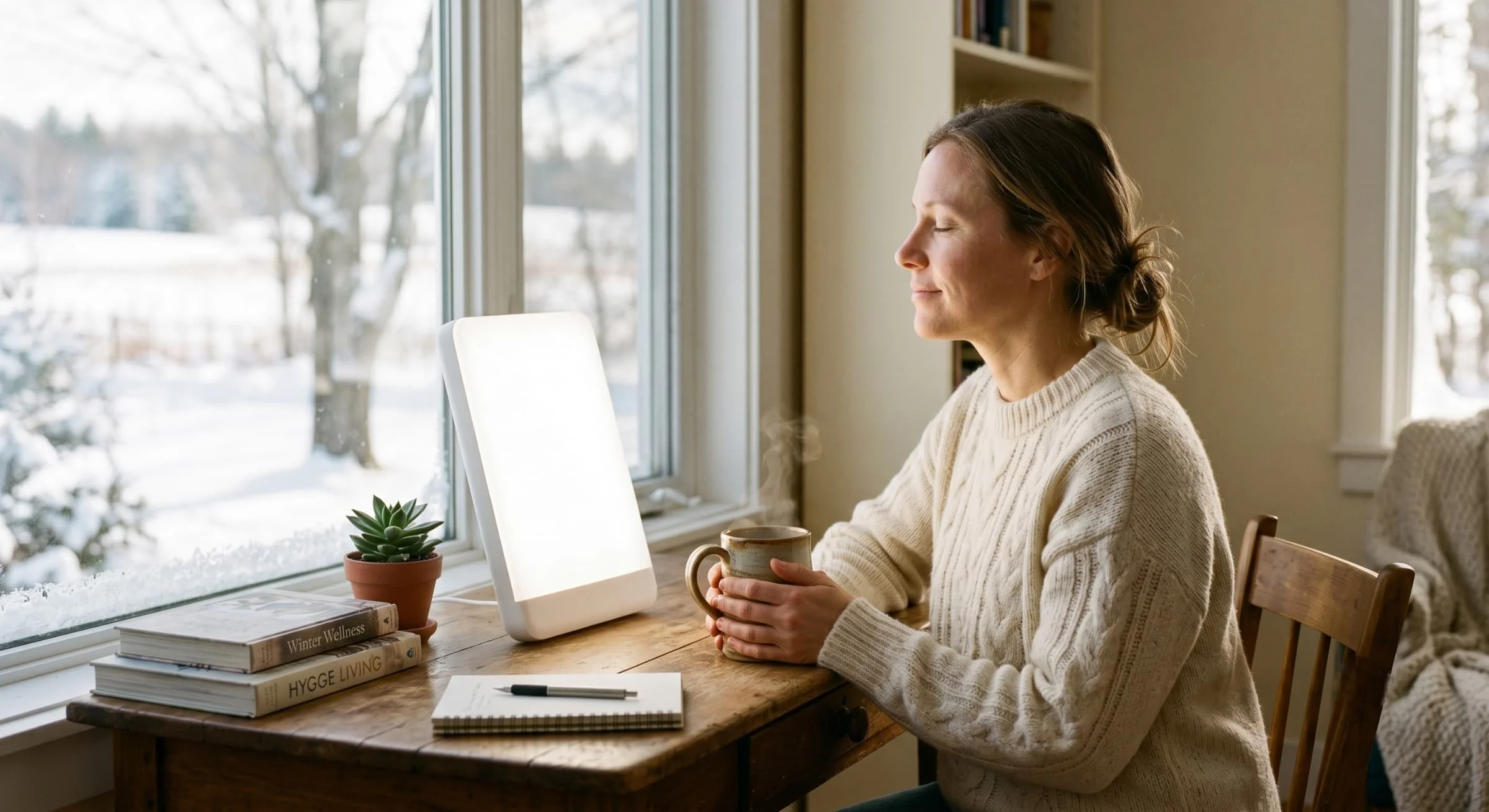
Light therapy (also called phototherapy) is the most studied frontline treatment for SAD. It means sitting in front of a special light box that gives off 10,000 lux of light – about 20 times brighter than normal indoor lighting. According to the American Psychiatric Association, a large review of clinical trials found bright light therapy helped about 41 out of 100 people fully recover and about 60 out of 100 see real improvement in depression symptoms. These results were much better than placebo.
For best results, Yale's Winter Depression program recommends:
Timing: Within the first hour of waking, ideally before 8 a.m.
Duration: 30 minutes each day.
Consistency: You need to use it every day to keep the benefits.
Does Vitamin D Help With SAD?
Vitamin D plays a role in brain health. Since most of our Vitamin D comes from sun exposure, levels naturally drop in winter. A review on PubMed found a clear link between low Vitamin D levels and depression symptoms. Vitamin D supplements can help close this gap, but they work best alongside other treatments. Talk to your provider about testing your levels before starting any supplement.
What About Cognitive Behavioral Therapy?
Light therapy targets the biology. CBT-SAD targets how you respond and act. This special type of talk therapy focuses on "behavioral activation" – helping people stay involved in fun and rewarding activities even when it's cold and dark. CBT-SAD can give long-term benefits because it builds skills that help prevent SAD from coming back in future winters. It works well alongside the quick effects of light therapy.
What About Choosing a Light Box?
Mayo Clinic guidance says that light boxes for SAD should:
Give off 10,000 lux of light at the suggested distance.
Filter out most or all UV light to protect the eyes.
Be made specifically for treating SAD (not for skin treatment or sleep problems).
How Can Seniors Manage Seasonal Depression?
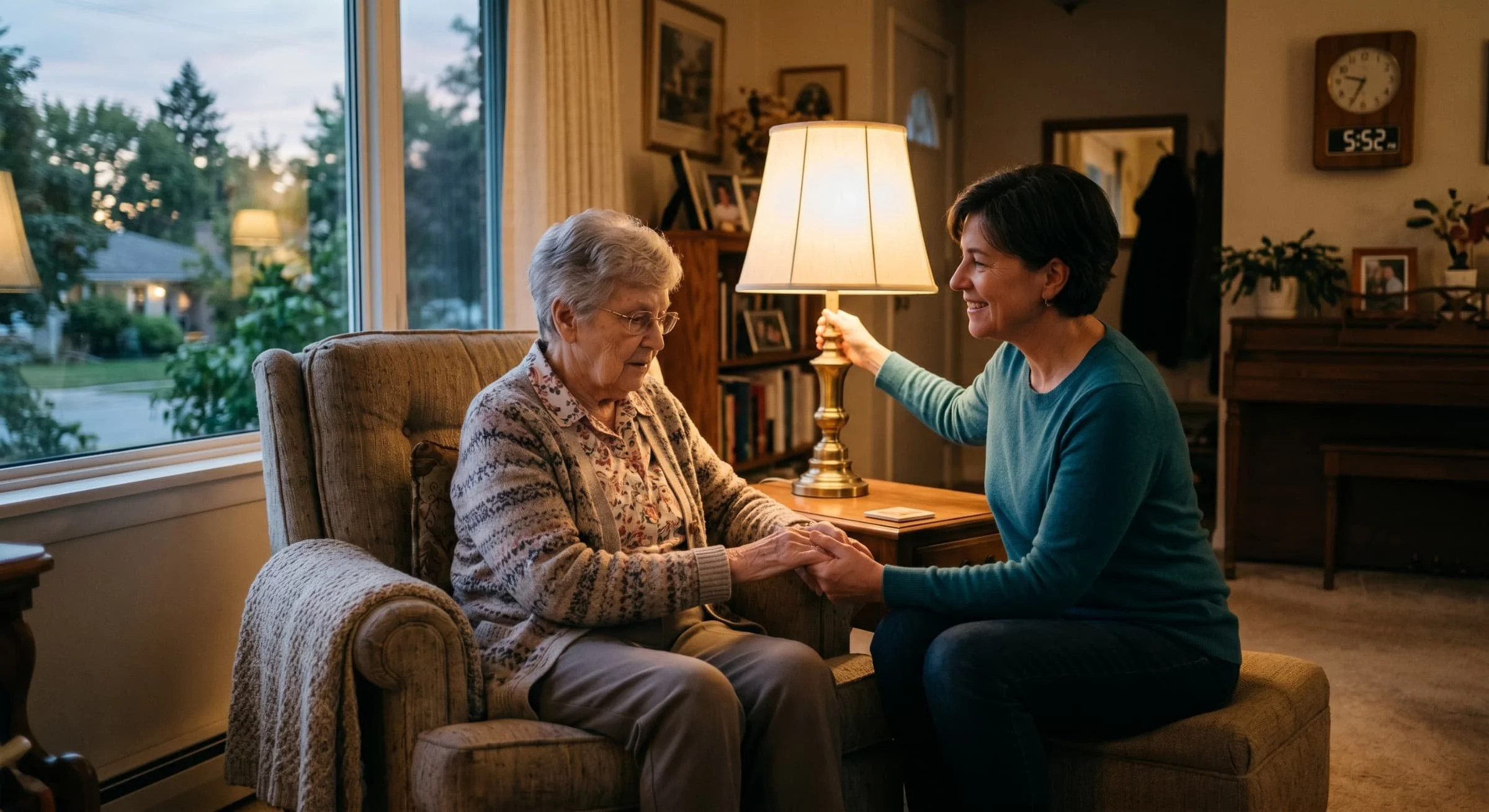
Seniors are especially at risk during seasonal shifts. Trouble getting around and feeling cut off from others can make less sunlight hit even harder. In places like Southern California, the seasonal change is more subtle. That can make symptoms harder to spot. But they are just as real.
For families working with home care providers like A Better Solution In Home Care, focusing on the home environment is key. Bright lighting in the home, regular outdoor time during midday, and a steady social calendar can really support mood. A team approach – where home care providers and medical professionals work together – is essential for seniors aging in place in the Burbank area, where staying connected to community is a big part of mental wellness.
What Lifestyle Changes Help With SAD?
Professional treatment matters. But daily habits are the foundation of getting better.
Get all the natural light you can: Open the curtains the moment you wake up.
Take morning walks: Even a 10-minute walk on a cloudy morning gives you far more helpful light than staying inside.
Eat well: Focus on lean proteins and omega-3 fatty acids (found in fish, walnuts, and flaxseed) to keep energy steady. Cut back on processed sugars that cause afternoon energy crashes.
Stay connected: Human contact is one of the most underused mood boosters there is.
When Should You Seek Professional Help?
If your seasonal depression is getting in the way of work or relationships, or if you feel a sense of hopelessness, it is time to talk to a professional. Doctor2me gives you access to physicians who can help find the right plan for you. Acting early is the best way to make sure winter feels like a season of rest, not a season of struggle.
FAQ
What is the best time of day for SAD light therapy?
Morning light therapy works much better than evening sessions. Aim for the first hour after waking and before 8 a.m. Using a light box at night can mess up your sleep by lowering melatonin at the wrong time.
Can Vitamin D replace light therapy?
Vitamin D supplements can support mood when your blood levels are low. But they are rarely enough to treat moderate or severe SAD on their own. They work best as a support along with light therapy or CBT-SAD.
How do I know if I have SAD or just a low mood?
The main clues are the seasonal pattern and how severe it gets. If your mood gets noticeably better every spring and summer, and your winter symptoms last more than two years in a row, it is likely SAD. A formal check with a healthcare provider can confirm it.
Is SAD more common in certain locations?
Yes. A study found that SAD is much more common in places with higher latitudes. For example, the rate goes from fewer than 2 out of 100 people in Florida to about 10 out of 100 in New Hampshire. People in sunny places like Encino can still develop SAD if they spend most of their time indoors.
Can children get Seasonal Affective Disorder?
Yes. In children and teens, SAD often shows up as irritability, refusing to go to school, or a sudden drop in school performance during winter. This looks different from the verbal sadness adults usually describe.
You May Also Like