Sundowning in Dementia: Evening Strategies for Caregivers
Sundowning is a pattern of confusion, restlessness, and worry that gets worse in the late afternoon and evening for many people with dementia. The simple sundowning meaning is this: as the sun goes down, your loved one may grow more anxious, agitated, or hard to settle. It is not a disease on its own. Doctors call it sundowners syndrome, and it is a group of behaviors tied to changes in the brain. About 1 in 5 people with Alzheimer's disease experience sundowning at some point, so if this is happening in your home, you are far from alone.
The good news is that small, steady changes often make evenings calmer. And on the hardest days, you do not have to leave the house to get medical help. With Doctor2me, you can choose a doctor and have them come to your home, often the same day, which spares your loved one a stressful trip and a crowded waiting room.
What Is Sundowning?
Sundowning describes new or stronger symptoms that show up as daylight fades. Many families notice their loved one is calm at lunch but tense by dinner. The change can feel sudden, and it can be scary the first few times you see it.
Common Signs in the Evening
Sundowning can look different from person to person. You may see one sign or several, and they often come and go. Common signs include:
Confusion about where they are or what time it is
Pacing, wandering, or trouble sitting still
Anxiety, anger, or sudden tears
Suspicion of people they normally trust
Seeing or hearing things that are not there
Trouble falling asleep or staying asleep
How Common Is Sundowning?
Sundowning is one of the more common evening challenges in dementia care. As noted above, roughly 1 in 5 people with Alzheimer's deal with it. It can begin in the middle stage of dementia and may ease again in the later stages. Knowing it is normal can take some of the fear out of it.
Why Sundowning Happens
Experts do not know the exact cause, but they have strong clues. Dementia changes the brain, including the part that controls the body's sleep-and-wake rhythm. When that inner clock gets mixed up, evenings can fall apart.
A Mixed-Up Body Clock
All of us run on an inner clock that tells us when to feel awake and when to feel sleepy. Dementia can damage this clock. A person may feel drowsy during the day and wide awake at night, which leaves them tired, cranky, and confused right when the day is winding down.
Tiredness, Hunger, and Pain
A full day of activity can drain a person with dementia. By evening, they may simply be worn out. Hunger, a full bladder, or pain can make things worse. Even a hidden problem, like a urinary tract infection, can trigger more confusion, so it is worth checking for these basic needs first.
Low Light and Shadows
As rooms get dark, shadows grow. A coat on a chair or a shape in the hallway can look frightening to someone who already has trouble making sense of what they see. Low light and shadows can spark fear, hallucinations, and a need to keep moving.
Sundowning and the Bigger Picture of Dementia
Sundowning rarely shows up by itself. It is usually one piece of a larger change in memory and thinking. Understanding the signs of dementia and how the condition moves forward can help you plan and feel more in control.
Early Signs of Dementia to Watch For
Many families miss the early signs of dementia because they come on slowly. Watch for memory loss that disrupts daily life, trouble finding words, getting lost in familiar places, poor judgment with money, and pulling away from hobbies or friends. If you notice these patterns, it is wise to talk with a doctor sooner rather than later.
The Stages of Dementia
Doctors often describe the stages of dementia as early, middle, and late. In the early stage, a person can still live fairly independently. In the middle stage, daily tasks like bathing and dressing get harder, and behaviors such as sundowning may appear. In the late stage, a person needs full-time help with almost everything. These dementia stages are a guide, not a strict timeline, since everyone moves through them at their own pace.
Alzheimer's Disease vs. Vascular Dementia
Alzheimer's disease is the most common cause of dementia. Alzheimer's symptoms usually start with memory loss and build slowly over years, touching thinking, mood, and daily skills. Vascular dementia is the second most common type. It is caused by reduced blood flow to the brain, often after a stroke or a series of small strokes.
The two can feel different day to day. Alzheimer's tends to creep along gradually, while vascular dementia often changes in steps, with a sudden drop followed by a steadier stretch. Early vascular dementia may affect planning and speed of thinking more than memory. Many older adults actually have a mix of both, which is called mixed dementia.
Evening Strategies That Help
You cannot stop dementia, but you can shape the evening so it feels safer and calmer. The goal is to lower stress, cut down on surprises, and help the body wind down. Try a few of these ideas and keep what works.
Keep a Steady Daily Routine
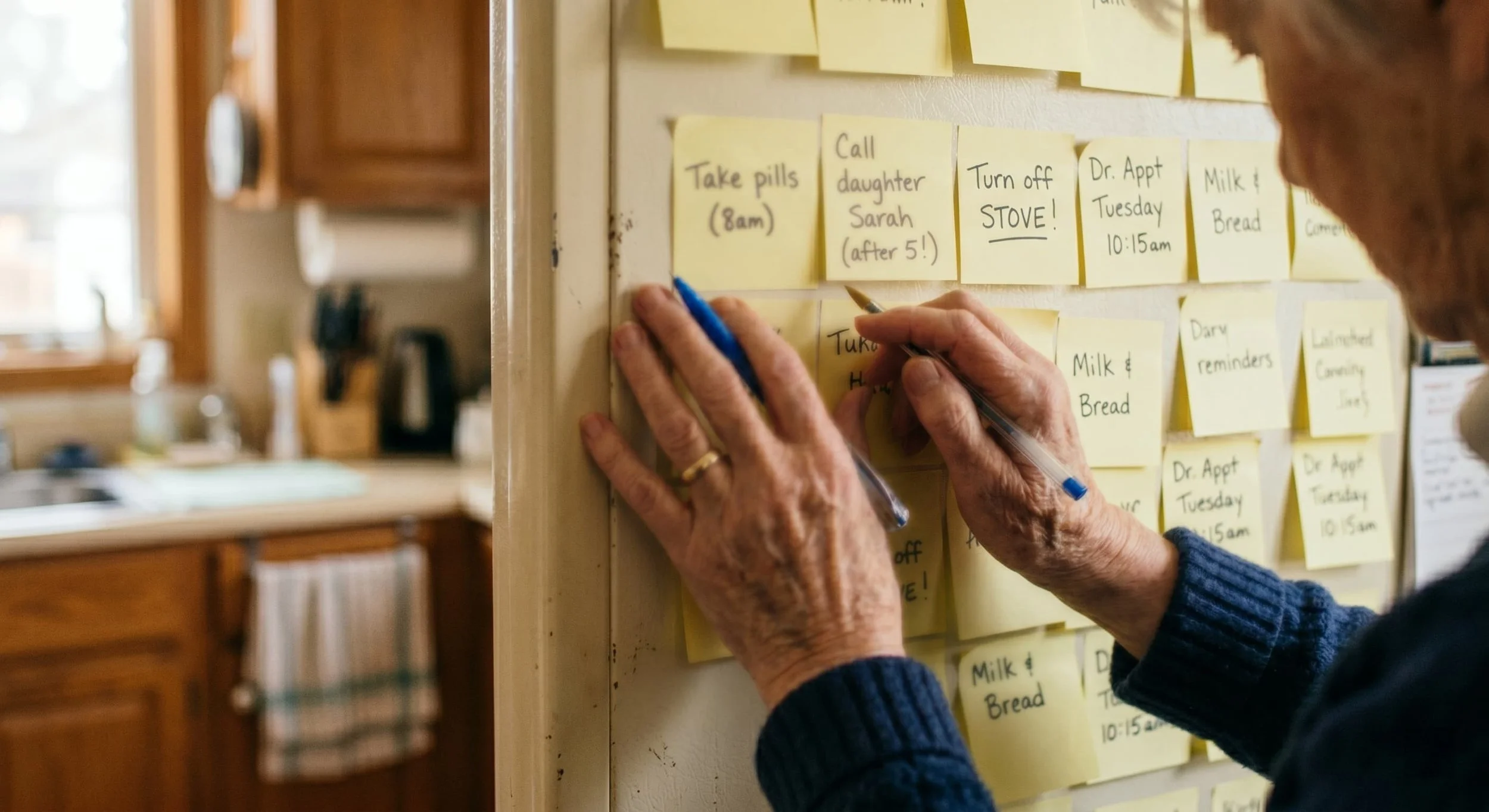
A predictable day is one of the strongest tools you have. Wake up, eat, rest, and go to bed at about the same times every day. Plan harder tasks, like doctor visits or baths, for the morning when your loved one has the most energy. Save the evening for quiet, familiar activities.
Use Light to Your Advantage
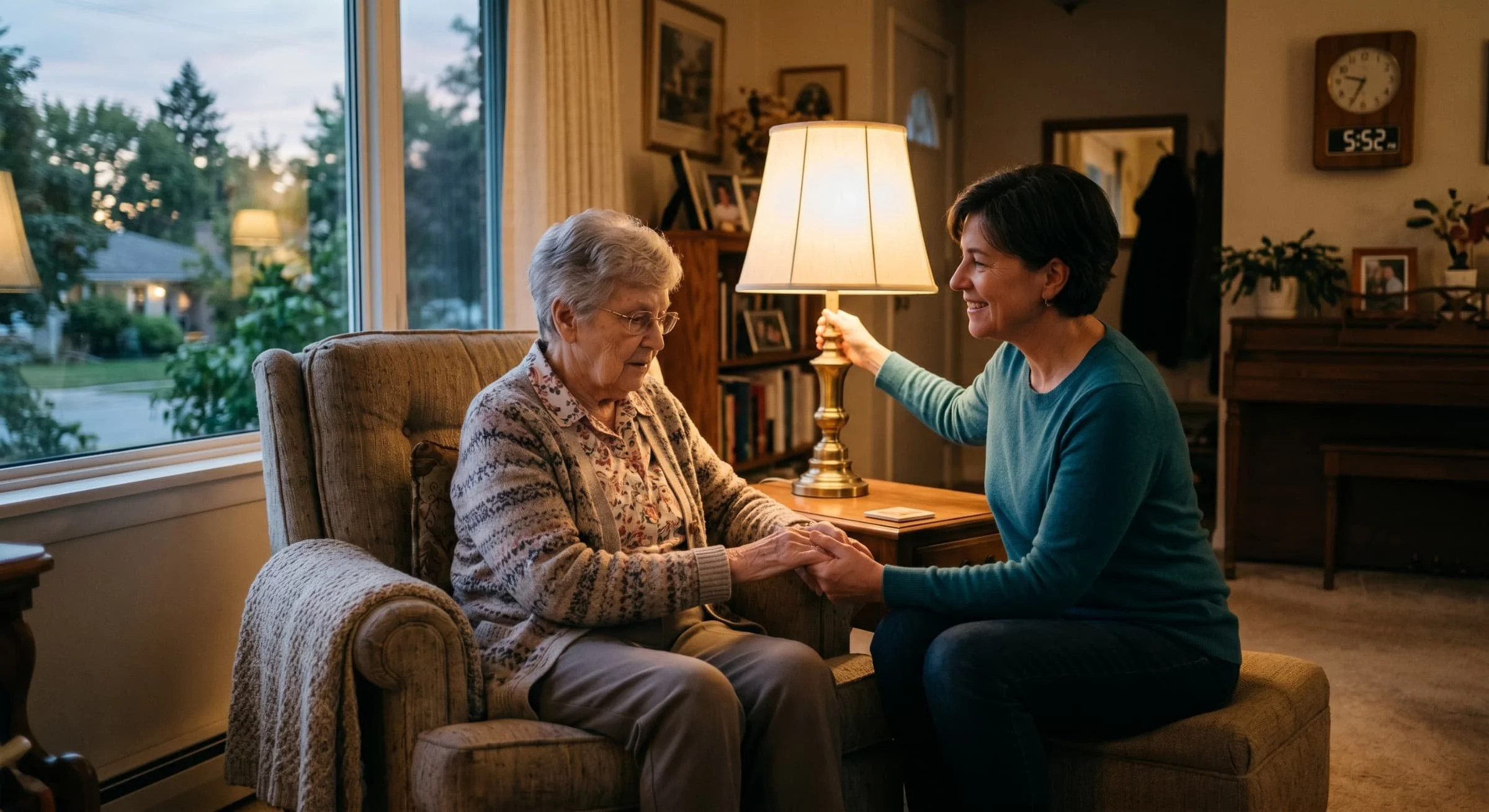
Light helps reset that mixed-up body clock. During the day, open the curtains and let in as much natural light as you can. A short walk outside or time by a sunny window can help. As dusk arrives, turn on lamps before the room gets dark so shadows do not have a chance to form.
Calm the Evening Environment
In the late afternoon, lower the noise. Turn off loud TV shows, soften the lights a bit at bedtime, and play gentle music if your loved one enjoys it. Keep well-loved photos and objects nearby. A peaceful room sends the message that it is time to slow down.
Watch Food, Naps, and Activity
Limit caffeine and big meals late in the day, and keep alcohol off the table. Avoid long naps in the afternoon, which can steal nighttime sleep. Build in some gentle activity earlier in the day, like a walk or light chores, so the body is ready to rest by night.
When the day-to-day care becomes a lot for one person, in-home support can lighten the load. Some families bring in trained caregivers through services like A Better Solution In Home Care, which offers personal care, homemaker help, post-hospital support, and programs built for dementia and other long-term conditions. A caregiver who knows the evening routine can keep things steady on the nights you need an extra hand.
When to Get Extra Help
Sundowning is common, but it is not something you have to manage alone. New or fast-changing confusion, a fever, or signs of pain can point to a treatable problem and deserve a doctor's attention.
Talk to a Doctor
A sudden jump in confusion can be a sign of infection, a medication side effect, or pain your loved one cannot describe. Getting them to a clinic can be hard, so a home visit is often easier on everyone. Through Doctor2me, you can pick a doctor and have them come to the house, usually the same day, with no waiting room and less risk of catching something while you are out.
Care Coordination and Caregiver Support
As needs grow, it can help to have someone guide the bigger picture. Care managers like Dementia Partner in West Hills offer cognitive and dementia assessments, ongoing monitoring, help choosing and managing caregivers, and 24-hour on-call support for emergencies. That kind of steady guidance can take real weight off a family's shoulders.
Memory Care Centers Near Me
Many families reach a point where they search for memory care centers near me. Memory care is a type of long-term housing built for people with dementia, with secure spaces, trained staff, and routines designed to reduce confusion. It is not a sign of failure to consider it. For some families, it is the safest, most loving choice once round-the-clock care is needed at home.
FAQ
What is the sundowning meaning in simple terms?
Sundowning means a person with dementia gets more confused, restless, or anxious in the late afternoon and evening. It is also called sundowners syndrome. It is a set of behaviors, not a separate disease.
What stage of dementia does sundowning happen?
Sundowning often starts in the middle stage of dementia, when daily tasks become harder. It can ease again in the late stage. Like other dementia stages, the timing is different for each person.
What triggers sundowning at night?
Common triggers include a mixed-up body clock, being overtired, hunger, pain, and low light that creates scary shadows. Hidden problems like an infection can also set it off, so check basic needs first.
How do you stop sundowning behavior?
You cannot fully stop it, but a steady routine, bright light during the day, a calm evening, and limits on naps and caffeine can reduce it. If symptoms are sudden or severe, talk with a doctor.
Is sundowning a sign that dementia is getting worse?
Not always. Sundowning can come and go and does not by itself mean a fast decline. Still, new signs of dementia or a quick change in behavior are worth a medical checkup to rule out other causes.
What is the difference between Alzheimer's disease and vascular dementia?
Alzheimer's disease usually starts with memory loss and worsens slowly. Vascular dementia comes from poor blood flow to the brain, often after strokes, and tends to change in steps. Many people have a mix of both.
You May Also Like