Smart Sensors & AI: Revolutionizing Safety for Living Alone
Table of Contents
For many people, the ability to live independently is a cherished part of their lifestyle. Whether you are a young professional in a high-rise or a retiree enjoying your golden years at home, "living alone" should never mean "being alone" during a crisis. Traditional emergency pendants were a significant step forward, but today’s technology has evolved far beyond the simple "I’ve fallen and I can’t get up" button.
We are entering an era where the home itself becomes an active participant in your well-being. By leveraging artificial intelligence in health care, modern smart sensors are creating a safety net that is both invisible and omnipresent. This reflects a broader movement by organizations like the National Academy of Medicine to harness AI for breakthrough improvements in patient safety, ensuring that help is always within reach without compromising your privacy or personal dignity.
The Evolution of Artificial Intelligence in Health Care
The concept of artificial intelligence for humans has shifted from science fiction to a practical, daily necessity. In the medical field, AI doesn't just process raw data; it learns complex behavioral patterns. Modern smart home systems now use advanced machine learning to understand your unique "baseline"—what time you usually wake up, how often you visit the kitchen, and your typical sleep architecture.
When the system detects a significant deviation from this baseline—such as a lack of movement for several hours or frequent, unusual trips to the bathroom during the night—it can trigger an automated alert. This transition from reactive care (waiting for a button to be pressed) to proactive care (noticing a problem before it escalates) is the most significant breakthrough in home medical assistance we have seen in decades. Leading healthcare institutions are already advancing patient-centered missions through AI transformations, utilizing algorithms sensitive enough to distinguish between a person lying down for a nap and a sudden, dangerous impact.
Virtual Companionship: Bridging the Social Gap for All Ages
Loneliness is often described as a "silent epidemic" in the United States, particularly for those who live solo. Chronic isolation can have serious health effects including increased risks for heart disease and stroke, making it a critical public health priority. This is where a virtual companion can make a life-changing difference, providing both emotional support and functional safety.
Unlike a simple voice assistant that merely sets timers or plays music, an artificial intelligence companion is designed to engage. These systems can check in on you, remind you to take your vitamins, and even provide cognitive stimulation through sophisticated conversation and games. They serve as a bridge between the digital world and human emotional needs, providing a constant presence that mitigates the risks of long-term isolation.
How a Virtual Companion Supports Mental Health
For individuals dealing with early-stage cognitive decline or simply the isolation of remote work, virtual help provides a critical sense of connection. Recent studies highlight the clear correlation between a lack of social support and mental health issues, emphasizing that AI entities can monitor subtle changes in speech patterns or tone of voice which might indicate the onset of depression. By providing constant, low-pressure interaction, they help maintain verbal skills and provide emotional support that feels surprisingly natural.
Proactive Safety: Fall Prevention and Real-Time Monitoring
Falls remain the leading cause of injury-related emergency room visits for people living alone. While hardware is important, the software—the "brain" of the house—is what truly saves lives. Modern fall prevention assistance systems no longer rely solely on cameras, which many find intrusive or uncomfortable. Instead, they use radar, LiDAR, and floor-vibration sensors to detect the specific physical signature of a fall.
To truly secure a home, tech must be paired with physical safety experts like Call Before You Fall, who specialize in modifying living spaces to prevent accidents before they happen. Clinical research published via PubMed confirms that AI systems for fall detection are significantly enhancing safety in domestic settings. When you combine structural safety—like grab bars and non-slip surfaces—with high-tech monitoring, the risk of a life-altering injury drops significantly.
From Wearable Sensors to Robot Care for the Elderly
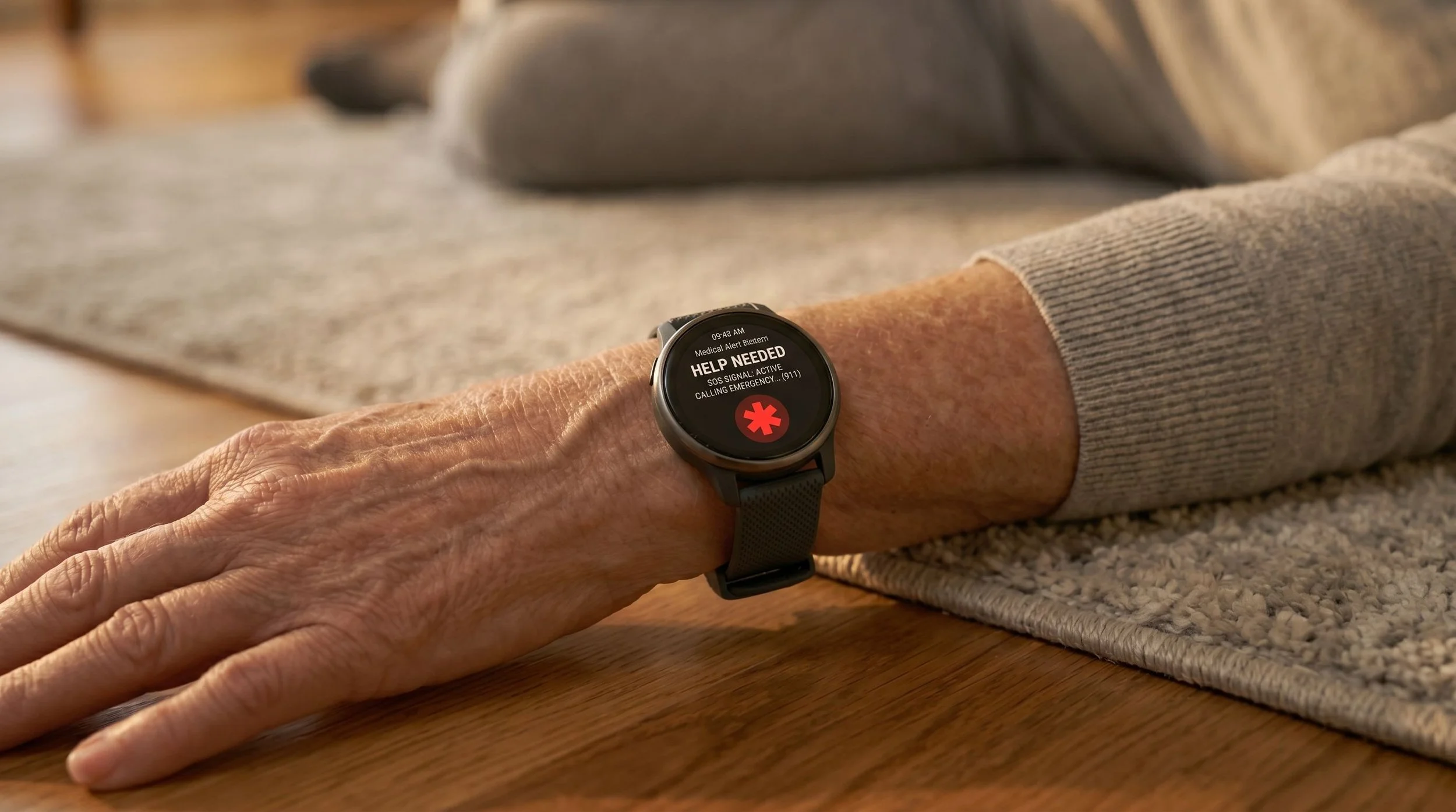
While some people prefer a smart watch or a ring, others find wearables cumbersome, uncomfortable, or simply forget to charge them. This has led to the rise of robot care for elderly individuals and those with disabilities. These robots are mobile hubs that can follow a person at a distance, detect falls, and even facilitate an emergency video call with a doctor or family member if they sense something is wrong.
In areas like Los Angeles and the San Fernando Valley, teams like Senior Helpers of North Valley are seeing firsthand how these technologies empower their clients. By integrating smart devices into daily routines, providers like Senior Helpers can offer a hybrid model of care. Human caregivers handle the personal touch and deep companionship, while technology maintains a 24/7 watch, ensuring that even in the middle of the night, no one is truly alone.
Comparison of Smart Home Safety Technologies
| Technology Type | Primary Benefit | Privacy Level | Best For... |
| Wearable Devices | Immediate alert via SOS button or impact sensor. | High | Active individuals who spend time both inside and outdoors. |
| Non-Invasive AI Sensors | Detects falls and behavior changes without cameras. | Very High | Bathrooms and bedrooms where privacy is a top priority. |
| Virtual Companions | Reduces loneliness and provides medication reminders. | Moderate | People seeking mental stimulation and routine management. |
| Care Robots | Physical monitoring and emergency video link. | Moderate | Individuals with mobility issues who need a "roving" assistant. |
Global Innovations: Lessons from Japan’s Care Robots
If we want to see the future of this field, we must look at japan robots for elderly care. Facing a rapidly aging population, Japan has invested billions in social robotics. Devices like "Paro," a robotic seal, have been clinically shown to reduce stress and improve social engagement among seniors.
These innovations demonstrate that technology and humans do not have to be at odds. Instead, robots take over the repetitive monitoring tasks, allowing human family members and caregivers to focus on meaningful, high-quality interaction. The goal is to use artificial intelligence for humans as a tool that enhances our natural abilities to care for one another, rather than replacing the human heart.
The Intersection of Technology and Humans in Modern Care
No matter how advanced an AI becomes, the human element remains irreplaceable. The goal of "smart" technology is to provide the data that humans need to make better decisions. If a sensor reports that an individual is becoming increasingly sedentary, it’s a signal for a family member or a professional service to step in and check on them.
For those navigating the transition to more supported living or seeking the best tech-enabled home care, consultants like Total Senior provide an invaluable service. They help families sift through the overwhelming options to find a living environment that balances the latest safety technology with high-quality human support. They understand that artificial intelligence in health care is most effective when it’s backed by a compassionate, expert human team.
Practical Steps: Staying Safe and Connected at Home
Adopting these technologies doesn't have to happen all at once. You can start small and scale up as your needs or comfort levels change:
Enhance Physical Safety: Start with a professional consultation to identify trip hazards and install low-tech solutions like better lighting.
Voice-Activated Help: Introduce a smart speaker or AI hub for hands-free virtual help in case of emergencies.
Advanced Monitoring: Invest in non-camera-based fall detection for high-risk areas like the bathroom or stairs.
When health concerns arise—perhaps a sudden fever or a nagging cough detected by your home’s health monitoring system—the last thing you want to do is sit in a crowded waiting room or travel across town. This is where Doctor2me offers a seamless, stress-reducing solution. By bringing professional medical care directly to your door, Doctor2me eliminates the logistical hurdles of healthcare and minimizes your exposure to hospital-acquired infections.
It is the perfect "human" bookend to a smart-tech home. It ensures that when your sensors flag a potential health issue, a qualified provider is there to solve it in the comfort of your living room. Living alone should be an empowering and safe experience. With the right mix of AI-driven safety and professional medical support, you can maintain your independence with the absolute peace of mind that you are never truly on your own.
FAQ
How does artificial intelligence in health care improve safety for those living alone?
AI monitoring systems learn your daily routines to detect unusual activity or potential emergencies before they escalate. Unlike traditional alarms, these proactive home medical assistance tools provide continuous oversight without the need for wearable buttons or intrusive cameras.
What is the difference between a standard voice assistant and an artificial intelligence companion?
While standard assistants perform simple tasks, an artificial intelligence companion is designed for deep engagement, providing emotional support and cognitive stimulation. These systems offer virtual help by managing medication schedules and monitoring subtle changes in mood or speech patterns that might indicate health issues.
Can robot care for the elderly really replace human caregivers?
The goal of robot care for elderly individuals is not to replace people but to enhance the synergy between technology and humans. Drawing from innovations like Japan robots for elderly care, these machines handle 24/7 monitoring and fall detection, allowing human caregivers to focus on specialized medical needs and companionship.
How effective is fall prevention assistance that doesn't use cameras?
Modern fall prevention assistance utilizes radar and floor-vibration sensors to identify the specific physical "signature" of a fall with high accuracy. This application of artificial intelligence for humans ensures immediate emergency response while maintaining total privacy in sensitive areas like bathrooms or bedrooms.
Is it difficult to set up virtual help for an independent lifestyle?
Starting with virtual help is often as simple as installing a smart hub or a non-invasive sensor kit that connects to your Wi-Fi. Many people find that a hybrid approach—combining smart sensors with professional on-call services like Doctor2me—provides the most reliable and stress-free way to maintain independence.
You May Also Like