Table of Content
Surgical wound care at home comes down to three habits: clean hands, a dry covered incision, and knowing which changes mean a phone call.
Clean hands before and after touching the wound matter most. The CDC (2024) names handwashing as a core step once you are home, and lists redness and pain at the site, cloudy drainage, and fever as the signs of a surgical site infection. MedlinePlus (2026) adds a clear threshold: call the surgeon if your temperature stays above 100°F (37.7°C) for more than 4 hours.
How Do You Clean a Surgical Wound at Home?
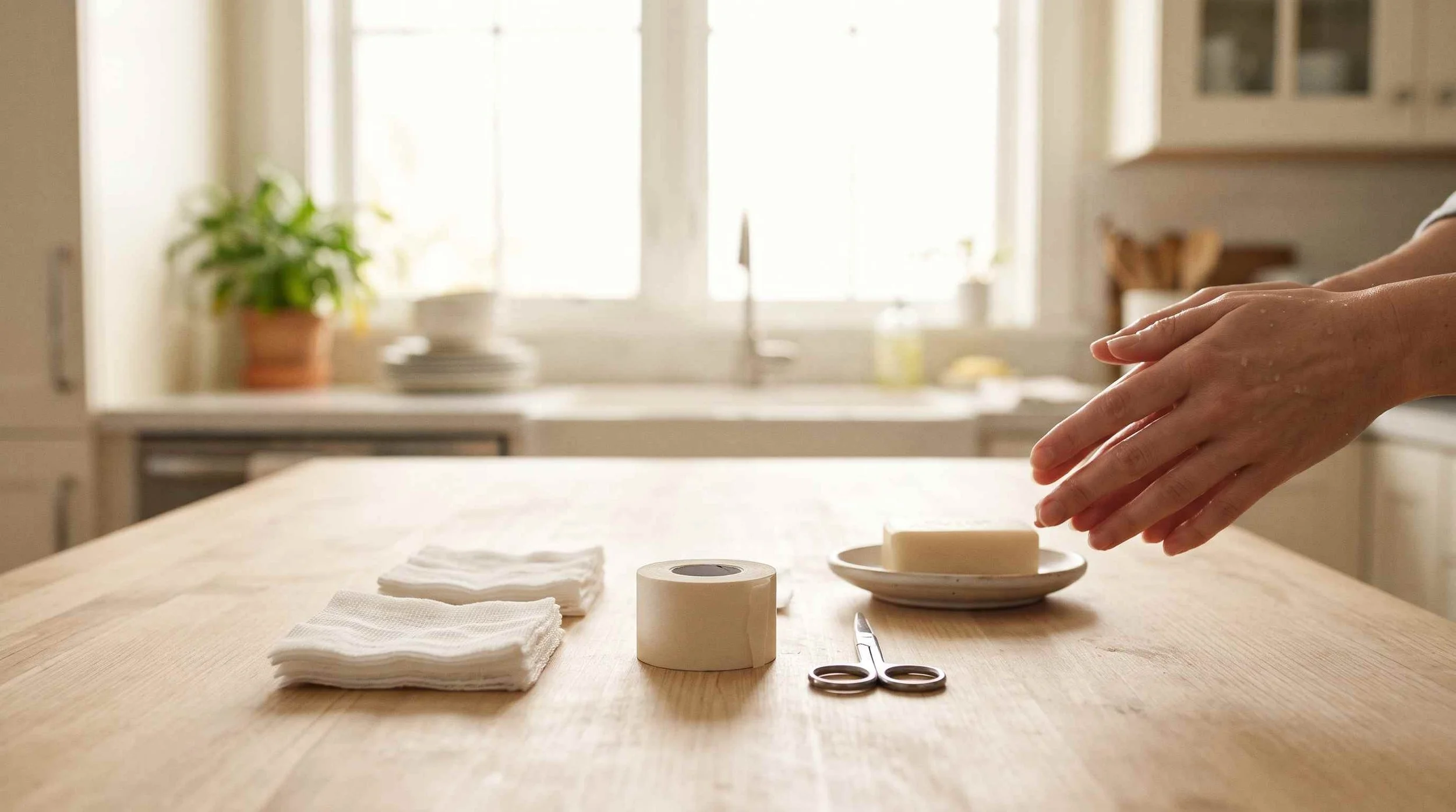
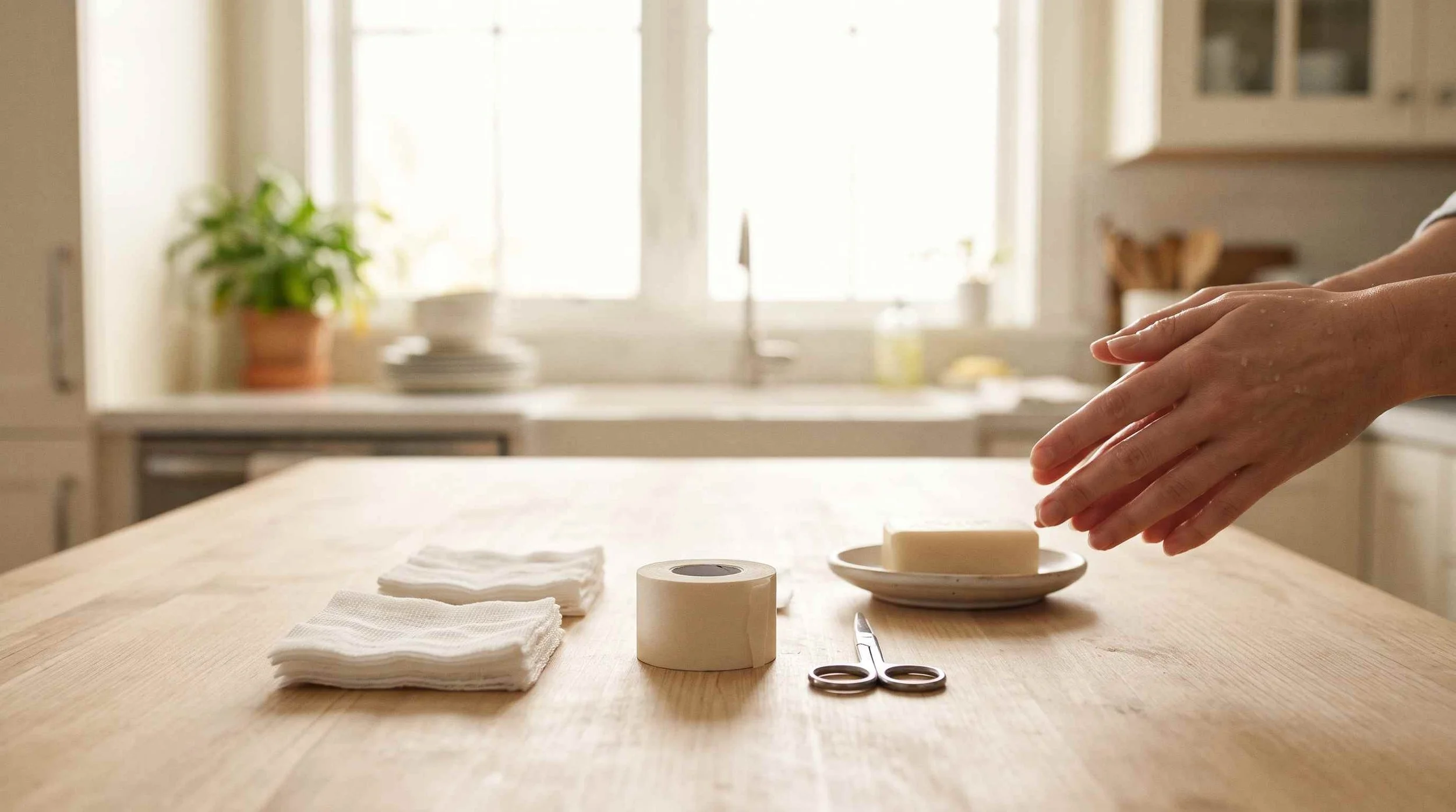
Follow the surgeon's written instructions first, because the plan depends on how the incision was closed. MedlinePlus describes the general routine for a closed surgical wound, and the main point is that your hands and your work surface need to be clean before the dressing comes off.
Changing the Dressing Step by Step
The sequence below follows the MedlinePlus instructions for a closed incision. Set out everything you need first so you are not hunting for tape with one glove on.
Wash hands with soap and warm water, including under the nails, then dry with a clean towel
Put on clean medical gloves if the wound is red or oozing, or if you are doing this for someone else; they do not need to be sterile
Loosen the tape from the skin slowly, and wet a stuck dressing with water before pulling unless told to pull it off dry
Drop the old dressing straight into a plastic bag, remove the gloves into the same bag, and wash your hands again
Place the new dressing without touching its inner surface, and tape down all four sides
Seal the bag and throw it away
What Not to Put on the Incision
Do not add antibiotic cream or any other product unless the surgeon says to. For an incision that has broken open and is being left to heal from the inside, MedlinePlus is firmer still: skip skin cleansers, alcohol, peroxide, iodine, and antibacterial soap, because they damage healing tissue and slow the process down.
Mild soapy water or plain saline on a gauze pad is what that open wound instruction (2026) describes for cleaning the skin around the wound. Pat the area dry with clean gauze. Do not scrub, and do not pull at stitches or staples to see how loose they are.
How Often Should a Dressing Be Changed After Surgery?
As often as the surgeon specified, and sooner if it gets wet or soaked. MedlinePlus says the original dressing can stay in place for as long as the surgeon allows, with one exception: a dressing soaked with blood or other fluid gets changed right away rather than left to sit.
There is no single schedule that fits every operation. A small incision closed with glue may need nothing after the first day. A long incision with a drain may need daily attention. The instruction sheet from the hospital is the authority here, not a general rule from the internet.
At some point the dressing stops being necessary. The surgeon decides when the wound can be left uncovered, and that moment usually arrives before the stitches come out. Until then, loose clothing helps, since fabric rubbing on the incision is a common reason a healing edge gets irritated.
Can a Surgical Wound Get Wet in the Shower?
Usually yes, after about 24 hours, but the surgeon sets the date. MedlinePlus notes that showers are better than baths because the wound does not sit soaking in water, and soaking can make an incision reopen or get infected.
Take the dressing off before showering unless it is a waterproof type or the surgeon said to leave it on. Some people are told to cover the area with a plastic bag instead. If rinsing is allowed, let the water run over the wound without rubbing or scrubbing it.
Afterward, pat the skin around the incision with a clean towel and let the wound itself air dry before a new dressing goes on. Skip lotions, powders, and cosmetics on or near the incision. Surgical glue is waterproof, but Cleveland Clinic (2023) still advises against soaking that area in a bath while the glue is holding the edges together.
Is Oozing, Redness and Pain Normal After Surgery?
Early on, a certain amount of each is part of healing. MedlinePlus (2026) describes the first stage of wound healing as slight swelling, skin that looks red or pink, tenderness, and some clear fluid seeping out, which helps clean the area. That stage lasts roughly 2 to 5 days.
What follows is rebuilding. Over the next three weeks or so the body repairs blood vessels, new tissue fills the gap, fresh skin forms over it, and the edges pull inward so the wound gets smaller. Itching during this phase is common and not a warning sign on its own.
The useful question is the direction of travel. Pain and redness that fade a little each day fit the normal pattern. Pain and redness that increase, or drainage that thickens and changes color, do not. The table below lines up the two.
|
Stage or Sign |
Expected |
Reason to Call |
|---|---|---|
|
Days 2 to 5 |
Slight swelling, pink or red edges, tenderness, a little clear fluid |
Redness spreading outward, or pain climbing each day |
|
First three weeks |
New tissue filling in, edges pulling inward, itching |
The wound getting larger, deeper, dried out or dark |
|
Drainage |
Thin and clear |
Thick, tan, green or yellow, or a bad smell |
|
Temperature |
Normal, or slightly up in the first day or two |
Above 100°F (37.7°C) for more than 4 hours |
|
Bleeding |
A small spot on the dressing early on |
Bleeding that does not stop with pressure |
Which Signs of a Surgical Wound Infection Need a Call Today?
Four changes around the incision are listed by MedlinePlus as reasons to contact the surgeon: more redness or pain, swelling or bleeding, a wound that is larger or deeper than before, and a wound that looks dried out or dark.
Drainage is the other half of the picture. Contact the surgeon if the fluid coming from or around the incision increases, or becomes thick, tan, green or yellow, or starts to smell bad. Cleveland Clinic adds color changes in the surrounding skin and bleeding that will not stop with pressure to the same list, and notes plainly that infections do not clear up on their own.
Fever belongs on the list too. Beyond the 4-hour threshold above 100°F (37.7°C), the CDC advises calling immediately if any infection symptom appears once you are home: redness and pain at the site, drainage, or fever. Staples and a drain site follow the same rules, since both are openings in the skin.
Waiting out these changes is what turns a treatable problem into a readmission. The warning signs overlap with the broader list in this piece on what to watch for after hospital discharge, and spreading redness in particular can look a lot like cellulitis in older adults.
How Long Do Surgical Wounds Take to Heal?
About two weeks for a straightforward incision, per Cleveland Clinic, with more complex ones taking longer. That is the outside closing over. The deeper rebuilding of tissue continues for about three more weeks after the surface looks settled.
Stitches, Staples, Strips and Glue
Timing differs by closure method. Cleveland Clinic puts suture and staple removal anywhere from three to 14 days depending on the size, depth and location of the wound. Absorbable stitches usually dissolve in one to two weeks, adhesive strips fall off on their own within two weeks, and surgical glue dries and flakes away in five to 10 days.
What Slows Healing Down
MedlinePlus lists the usual culprits: infection, which makes a wound larger and slower to close; diabetes, which raises the risk of a wound that will not heal; poor blood flow from narrowed arteries or vein problems; and extra weight, which both raises infection risk and puts tension on stitches.
Age and overall health shape recovery too, which is part of why the decision to operate at all gets weighed so carefully later in life. Dr. Rebecca Cook works through that calculation in detail in surgery risks for the elderly (2026).
An incision that stops making progress, or one that reopens, needs a set of eyes on it rather than another week of waiting. Specialist wound services such as GotWound.com focus on hard-to-heal wounds and see patients at home, in an office, or by video. The same urgency applies to any slow wound, as this look at a diabetic foot ulcer that will not heal explains.
How to Keep Scar Tissue to a Minimum
Keeping the wound clean and covered is the part that is actually within your control. MedlinePlus frames it that way, and adds a specific don't: avoid picking or scratching at a scab, because that interferes with healing and makes scarring more likely.
Expectations help as much as technique. A scar starts out stretched, red and shiny after the scab comes off, then fades, sometimes over as long as two years, and sometimes not completely. A scar is always smaller than the original wound, and always less strong and less flexible than the skin around it.
Popular remedies are weaker than their reputation. MedlinePlus states that massaging a scar with vitamin E or petroleum jelly is not proven to prevent scarring or help it fade, and advises checking with your provider before rubbing anything into it. Keeping a healing incision out of direct sunlight is the one habit Cleveland Clinic calls for by name.
When a Home Nurse Makes More Sense Than Doing It Alone
Some wounds are simply hard to reach or hard to judge. An incision on the back, a drain that needs managing, a dressing that has to be packed rather than taped, or a patient who cannot see the site well are all situations where a skilled nurse changes the odds.
Home health agencies run wound care programs for exactly this. Guardian Angel Home Health covers skilled nursing and wound care across Santa Clarita, Simi Valley and nearby communities, including lab draws at home when the surgeon wants bloodwork. Therapy at home often runs alongside it, as described in rehab and respite care after surgery.
For someone who cannot get back to the surgeon's office, a doctor who comes to the house can look at the incision and decide what happens next. That option matters most for people who are bedridden after surgery, and the groundwork for a smoother recovery is often laid earlier, at the preoperative exam.
FAQ
-
Usually within one to two weeks, though Cleveland Clinic notes they can last a few months depending on how a body heals. A provider can remove them earlier if they are bothering you. Pulling at them at home is not an option, even when they look loose.
-
Trim them rather than peel them. Cleveland Clinic advises cutting the curled edge, since peeling strips off irritates the skin underneath. Whatever is left can be removed gently after about two weeks.
-
Short walks are often encouraged because movement improves blood flow. Lifting, pulling, straining exercise and sports are a different matter: Cleveland Clinic advises avoiding them for about a month after surgery, or until the provider approves, to keep the incision from opening.
-
A razor irritates the skin and makes infection easier, which is why the CDC advises against shaving near the planned incision and suggests speaking up if someone tries to shave the area with a razor before surgery.
-
Yes, with two rules from the CDC: nobody should touch the surgical wound or the dressings, and everyone should clean their hands with soap and water or an alcohol-based rub before and after visiting.
-
Because new tissue grows back differently than the original. MedlinePlus explains that after the scab falls off the area often looks stretched, red and shiny, and that this appearance settles gradually. Some people, more often those with darker skin, form thick raised scars called keloids.
Sources Used
How wounds heal – MedlinePlus (2026)
Incision & Surgical Wound Care – Cleveland Clinic (2023)
Surgical Site Infection Basics – Centers for Disease Control and Prevention (2024)
Surgical wound care - closed – MedlinePlus (2026)
Surgical wound care - open – MedlinePlus (2026)

Written by Sofiia Puhach
November 24, 2026
You May Also Like